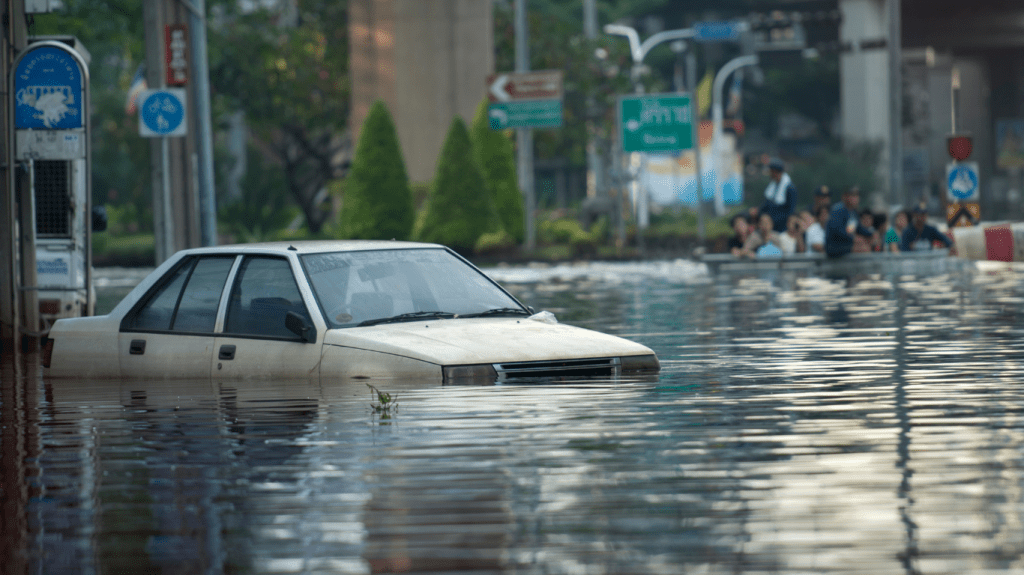
It’s summer in Canada, but you wouldn’t know it from the skies of the past couple of weeks. Here in Calgary, and in other parts of Alberta, the season has been soaked—grey skies, persistent rain, and puddles where the sun should’ve been. The soggy sidewalks and waterlogged parks remind me of the rainy season back home in the Philippines. But while rain here is an inconvenience, there, it’s often a catastrophe.
In the Philippines, the monsoon isn’t just a weather pattern—it’s a harbinger of loss. Typhoons regularly barrel through the archipelago, leaving behind destruction: flattened homes, submerged towns, missing loved ones. Each year, families are forced to start over. Each year, we rehearse a painful ritual of rebuilding.
And still—somehow—we smile.
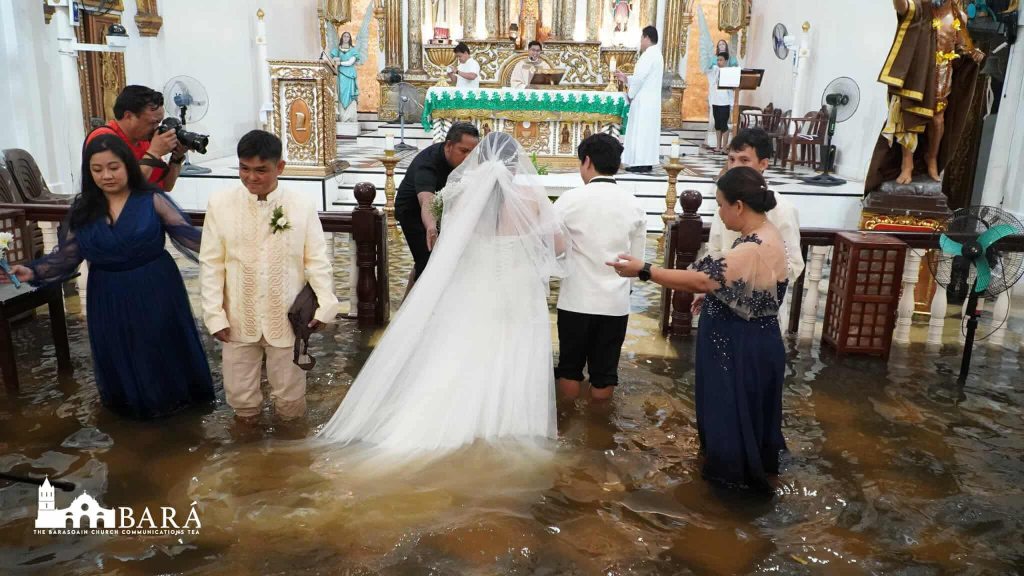
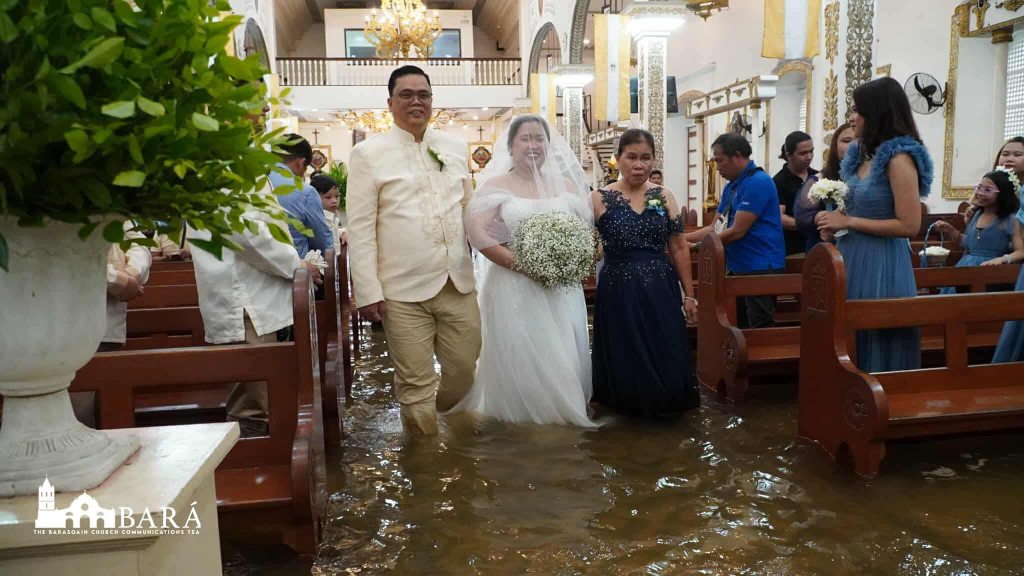
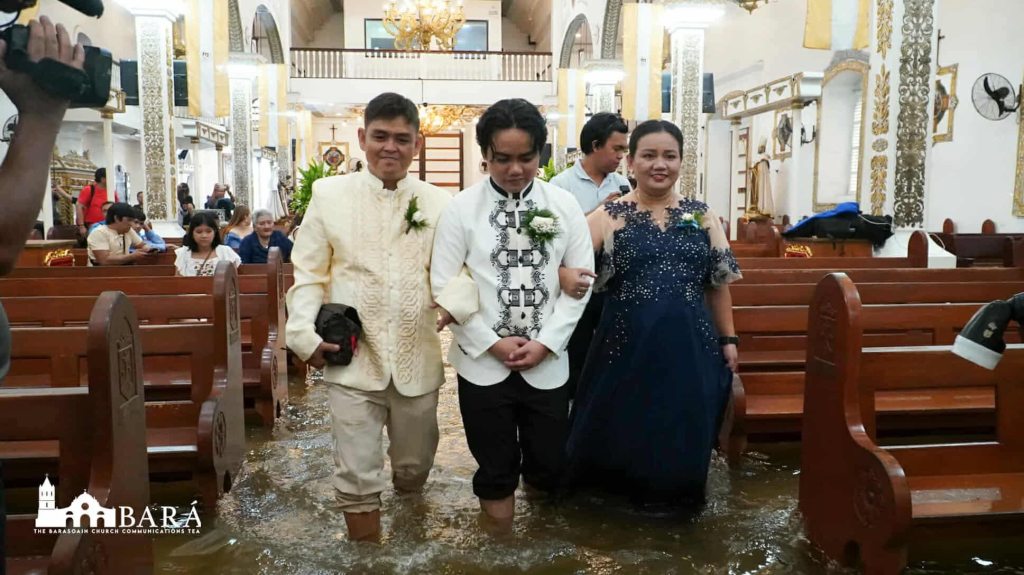
Take for instance this scene in the heart of a flooded Barasoain Church, where murky water reached mid-calf and pews stood half-submerged, a wedding procession moved forward—undaunted, barefoot, and full of grace. The groom, flanked by proud parents in barong and gown, waded through the water with quiet determination, while the bride and groom later sealed their vows with a kiss before the altar, surrounded by rippling reflections of faith and joy. These images are more than snapshots of a soggy ceremony—they are proof of the indomitable Filipino spirit, where love carries on, celebrations bloom amid disaster, and even floodwaters cannot drown the will to rejoice.
Videos surface of children swimming in flooded streets, men cracking jokes in waist-high water, neighbours helping each other as if it’s just another Tuesday. We’ve normalized disaster. We’ve romanticized resilience.
But what choice were we given?
Sometimes I admire that resilience. Other times, I resent it. I resent that we’ve been trained—forced—to endure what no one should have to endure. Our resilience is not a virtue born of choice; it’s the scar tissue of generations betrayed.
We’ve been betrayed by history—by Spanish colonizers who used the cross and the sword, by Americans who promised democracy and delivered dependency, by Japanese soldiers who brutalized civilians. But worse, perhaps, is the betrayal from within.
We were gutted by the Marcos dictatorship, whose legacy of plunder and brutality continues to haunt us. Billions stolen. Thousands tortured and killed. Historical memory blurred and rewritten. Now, his son sits in Malacañang—propped up by troll farms, revisionist myths, and the hunger of the privileged to maintain their place in the rot.
We were violated again by Duterte, whose regime turned extrajudicial killings into policy and whose macho populism masked incompetence and cruelty. Thousands dead in the drug war. Critics silenced. Press freedom under siege. His reign didn’t end with his term—it simply passed the baton.
And now we watch another president—another Marcos again—kowtow to foreign powers, embrace American tariffs without protest, and govern without spine. He smiles for the cameras while rice prices soar and classrooms crumble.
Filipinos are not naturally resilient. We are not born with gills to survive the flood. We were made this way. Made to endure. Made to laugh at pain. Made to sing in the wreckage. But that isn’t heroism—it’s generational exhaustion.
When the rains fall in Canada, I think of home—not just of water and wind, but of what has been stolen from us. The quiet dignity of living without fear. The right to thrive without first surviving a storm.
I live a relatively comfortable life now. Here in Canada, I am dry when it rains, warm when it snows. The infrastructure works. The ambulances arrive. The leaders may fumble, but they are held to account. I know I’m somewhat insulated from the worst of what’s happening in the Philippines—by an ocean, by privilege, by the accident of immigration.
But I’m not comfortable with that comfort.
I don’t pretend to speak for those back home, nor do I romanticize their struggle. I know what it’s like to live there. I’ve stood in ankle-deep floodwater, watched roofs fly off in typhoons, seen power outages that lasted for days. I know the weight of hoping the water stops rising.
So, when people post about Filipino resilience with a smiley face emoji, I flinch.
What the world calls resilience is often just our ability to carry grief quietly. To rebuild what should never have been broken. To normalize neglect.
Filipinos deserve more than admiration for how well we endure. They deserve a country that no longer demands so much from them just to stay afloat.
And I—safe, distant, changed—carry that knowledge with me. It weighs differently now, but it still weighs.

 Renato Gandia