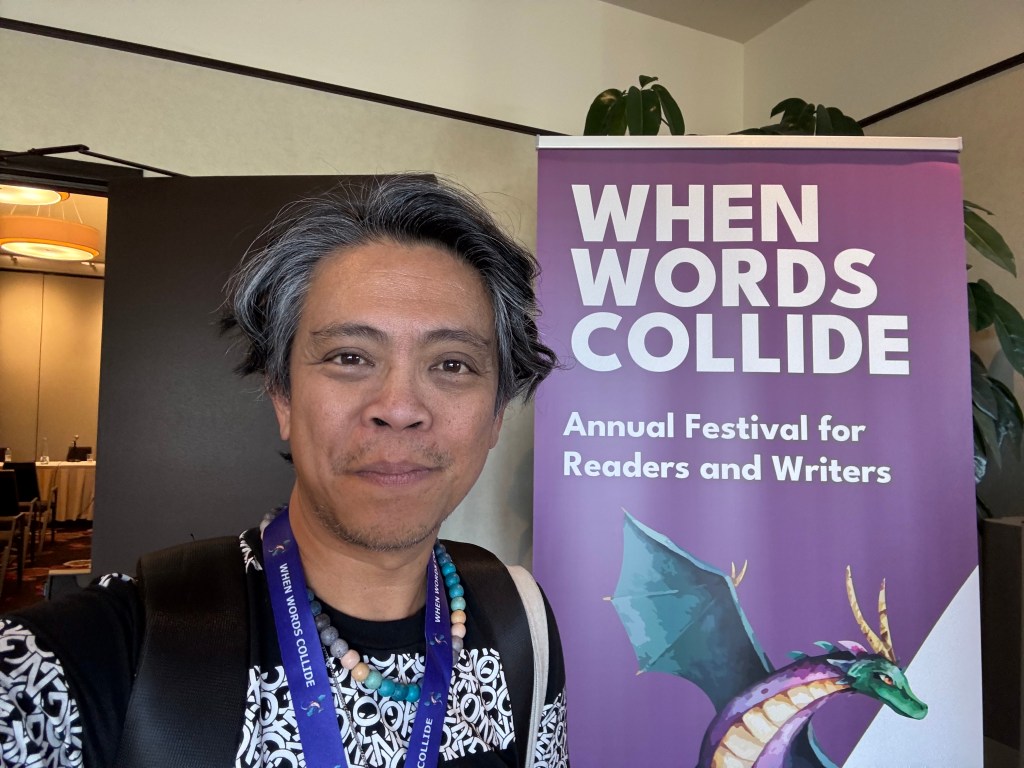
The conference hotel buzzed with the low hum of writers finding each other. The check-in line snaked past tables piled with tote bags and name badges, and already conversations sparked around me—fantasy writers comparing notes on trilogies, a romance author explaining her cover design woes, an older man muttering about the elusive nature of dialogue tags. It was, in the best possible way, overwhelming.
This was my first time attending When Words Collide in Calgary, and walking into those halls felt like stepping into a parallel universe where every stranger had something in common with me: a love of words, of story, of chasing after meaning through the act of writing.
I had come with specific goals. I wanted to test my work in front of fresh eyes, to learn how to make my novel more compelling, and—most importantly—to be reminded why I write at all. I left with all of that, and something more intangible: a sense of belonging.
The blue pencil moment
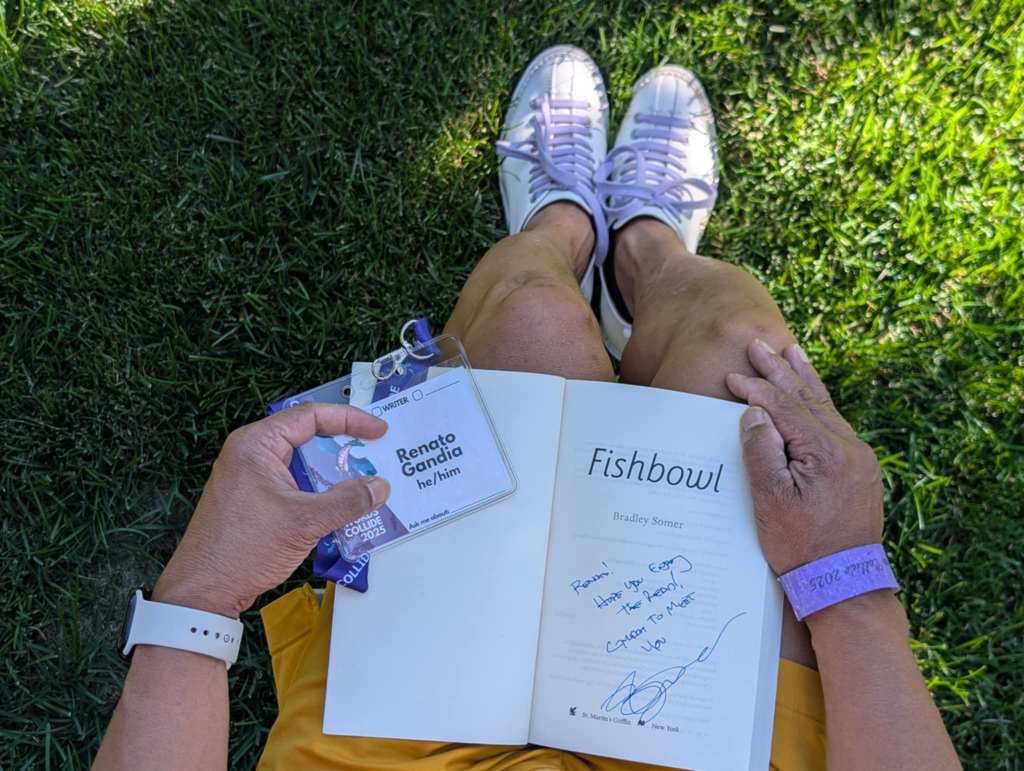
One of my most anticipated sessions was the blue pencil critique with Bradley Somers. For days before the conference, I had agonized over whether to send the first few pages of my novel or my memoir. I chose the beginning of my novel, which I thought represented my voice well, though part of me feared I was setting myself up to be dismantled.
Instead, Bradley surprised me. He told me I had a very clean and compelling start to my novel, one that established so much in so little time. Within the first page, he said, he could already see the conflict, the protagonist and antagonist, the tension, and even the genre of the work.

That affirmation was a gift, but it wasn’t the only thing I carried away. Bradley also pointed out a habit I hadn’t noticed in myself: a tendency to use both telling and showing in the same paragraph, diluting the effect of each. It’s something I’ll need to avoid as I refine my work further.
I walked out of that session buzzing, carrying not only scribbled notes but also a sharper sense of my own strengths and blind spots. It reminded me that critique is not about being torn down but about being shown what’s working, what’s not, and where the real possibilities lie.
Learning the mechanics of a page-turner
If the blue pencil critique opened my eyes to the shape of my novel, the masterclasses I attended gave me tools to actually reshape it. I signed up for two sessions focused on craft, both of which drilled down on what makes a book compulsively readable.
The instructors didn’t talk about gimmicks or cheap tricks. They spoke about rhythm—how the length of a sentence can accelerate a reader’s pulse. They spoke about chapter endings—the subtle art of satisfying the reader just enough to keep them hungry for more. They spoke about character motivation as the deepest engine of plot.
As I listened, I thought of my own manuscript: the places where the energy lagged, the chapters that seemed to end with a sigh instead of a spark. For the first time, I could see not only where my story faltered but also how I might rebuild it.
Into the slush pile
Perhaps the most nerve-racking experience was the slush pile readings. In these sessions, brave attendees submitted the first pages of their novels to be read aloud anonymously. Editors and literary agents then offered instant reactions.
In two separate readings, I submitted the first page of my novel, my stomach a tight knot as I listened to the reader’s voice carry my words across the room. Within seconds, I wanted to bolt. But then something unexpected happened: instead of dismissing the work outright, the panelists leaned in.
Both an editor and an agent remarked that the page evoked the feel of Sleeping with the Enemy—a comparison that caught me off guard in the best way. They explained that the tension, atmosphere, and unease threaded through those opening paragraphs reminded them of that story’s suspenseful pull.
Alongside the comparison, they offered constructive comments, highlighting what drew them in and gently pointing out what pushed them back. Their feedback was precise, practical, and—most importantly—encouraging.
It struck me how different it felt to hear professionals talk about my words, stripped of any knowledge of who I was or what my intentions had been. They were only responding to the story on the page. That raw honesty was a gift.
The pitch
But if the slush pile felt nerve-racking, the most vulnerable moment came when I sat down for my first ever in-person pitch. For months, I had been polishing my memoir manuscript, revising and re-revising, waiting for the right chance to bring it into the world. And now, at a small table in a crowded room, the chance had come.
I stumbled a little at the start—how do you compress years of lived experience, of heartbreak and discovery, into a handful of sentences? But the publisher listened attentively, asked thoughtful questions, and leaned in as I described what the book meant to me.
In the end, she didn’t say “yes.” Not in the way I had imagined. My memoir, she explained, wasn’t the kind of project her press publishes. But she didn’t stop there. She told me the story was important to tell. She asked to see the first chapter anyway, to get a feel for my writing. And then she went a step further: she offered to connect me within her network to people who could help find a home for the book.
Walking away from that pitch, I felt strangely triumphant. A “no” that comes with genuine encouragement and practical support doesn’t feel like failure—it feels like the beginning of possibility.
The quiet work of growth
Between sessions, I often found myself lingering in the hallways, watching as conversations bloomed around coffee cups and half-eaten sandwiches. I’m an introvert by nature, and unless someone struck up a conversation with me, I mostly stayed on the edges—smiling, listening, and battling the familiar pangs of imposter syndrome.
Even so, I caught fragments of exchanges: poets wrestling with hybrid forms, sci-fi authors mapping entire galaxies on their laptops, memoirists confessing that the hardest part was deciding what to leave out. Just overhearing those struggles was enough to remind me that every writer, no matter how seasoned, is still figuring it out. We are all apprentices to the craft. That truth felt oddly liberating.
I came to When Words Collide hoping for validation. What I found was something better: momentum. The critiques and masterclasses didn’t tell me, “You’ve made it.” They told me, “Keep going.”
Why This Matters
I often wonder why I keep writing, especially on the days when it feels like no one is listening. Writing is a lonely, unglamorous task. It asks for long hours in front of a blank screen, for faith in sentences that may never find their readers. But conferences like this remind me that even though the act itself is solitary, the journey is not.
We gather in hotel hallways and panel rooms not just to learn but to reassure each other: your words matter, even if only to the handful of people in this room today. And that is enough to keep going.
Looking Ahead
Now, back at my desk in Calgary, the notes from When Words Collide are spread out around me: arrows scrawled across margins, bullet points about pacing, fragments of sentences that could serve as chapter endings. I feel like I’ve been handed a map, not to an endpoint, but to the next stretch of road.
I don’t know if my novel will ever land in the hands of a publisher. I don’t know if readers will ever dog-ear its pages or argue over its characters. I don’t know if my memoir will find its place in the world. But I do know this: I am growing. And growth, for a writer, is the only guarantee worth holding on to.
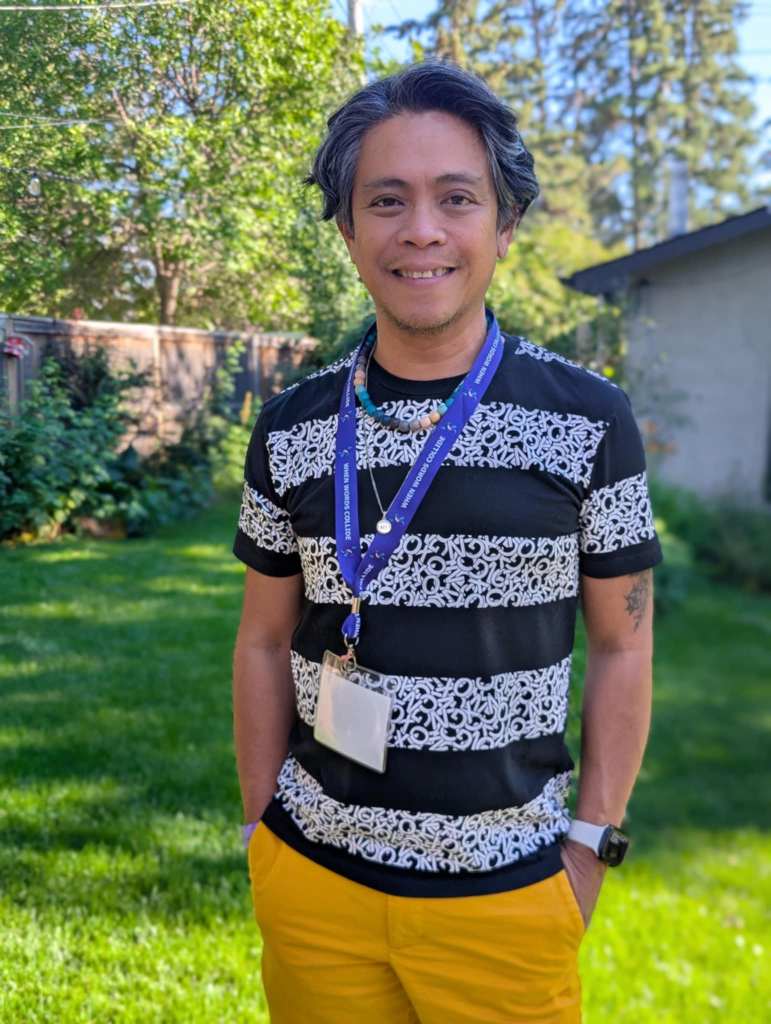
At When Words Collide 2025, I found more than advice or critique. I found energy. I found community. I found the reminder that I am not alone in this stubborn, beautiful craft.
And perhaps that is the truest gift of all.

 Renato Gandia