I/
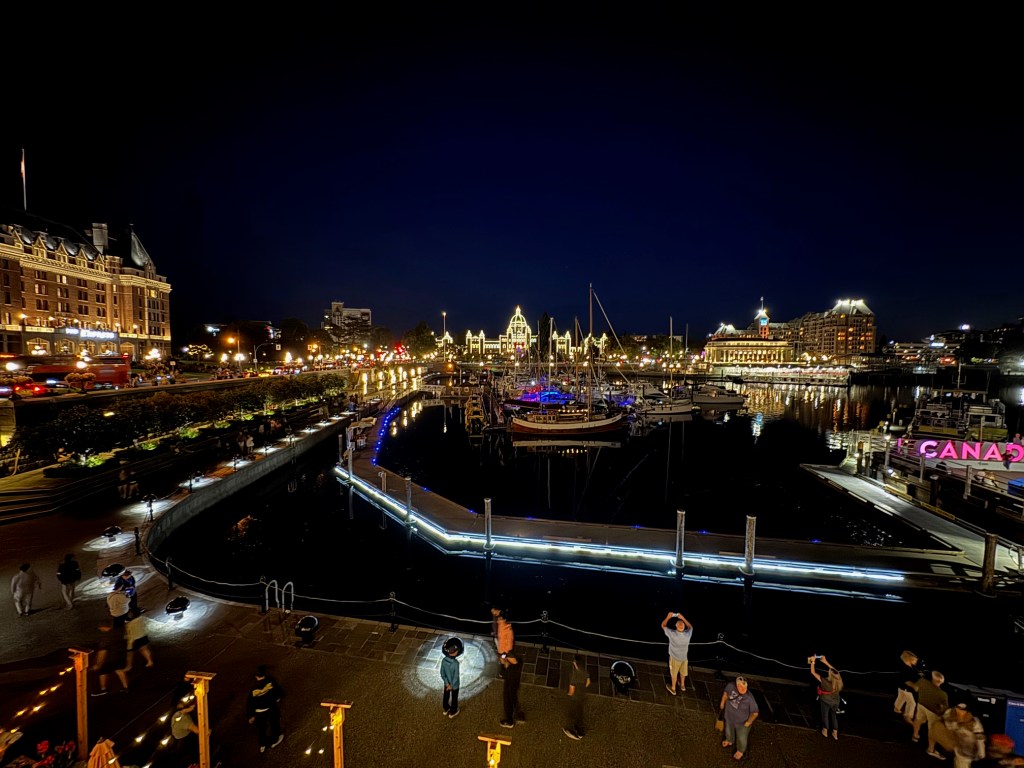
The three of us drifted through Victoria’s old streets, the stone facades still warm from the day. From the plaza ahead came a saxophone’s low curl, a melody that tangled with bursts of laughter spilling out of open cafés. Down at the harbour, water shifted with each passing boat, breaking the reflections of lanterns and streetlamps into trembling shards of gold. My brother leaned on the railing, my husband paused to take in the skyline, and for a moment we stood there—caught between the hum of the city and the quiet pull of the Pacific, its presence stitched into every light, every note, every breath of evening air.

It was not the Pacific I had known in Quezon, where the sea revealed itself in crashing waves and sudden storms. Here it was gentler, domesticated by boardwalks and marinas, carrying the glow of the city instead of the scent of salt and fish. Yet I felt the same stirring I always do when I stand before this vast water: a pull, a recognition.
The Pacific has never been just scenery to me. It is memory, threshold, inheritance. Even here, on a foreign shore, I could sense the same undertow that touched my childhood—an ocean that connects more than it separates. As I leaned on the railing, listening to the music, I felt caught between two lives: this luminous night in Victoria and the echo of another coastline half a world away.
II/
In Calauag, Quezon, the sea did not roar. It breathed. Lamon Bay stretched wide and quiet, its waters lapping gently against the shore where bancas rested like tired birds during the day. At dusk, the fishermen would push off, their kerosene lamps bobbing like fireflies against the dark. We children watched them disappear into the horizon, the night swallowing both men and boats. By morning, they would return, nets heavy with galunggong or tamban, the air sharp with the smell of fish and salt. The sea was livelihood, not spectacle. It sustained us, but it also demanded respect—one storm, one wrong tide, and a life could be lost.
In Cavite, I learned a different shoreline. Children waded out until the water reached their waists, women squatted in the shallows cleaning bangus or squid, their hands quick and practiced. Men pulled in nets that flashed silver with sardines and mackerel, their shouts carrying across the water. During fiestas, the sea seemed to join in—boys dunking each other in the surf, barrels tipped over heads in play, laughter ringing louder than the church bells. Even baptism returned us to water, the ritual reminder that to be Filipino was always to belong to the sea.
The tides, calm or fierce, taught me early what it meant to live with beauty and danger braided together. Water shifted constantly, never the same from one day to the next. In that ceaseless movement, I glimpsed the first lessons of art.
III/
As children, we were told not to swim too far into the bay—not only because of the currents but because the sirena lived there. Half-woman, half-fish, she was said to sing men into the deep, cradling them until they forgot the world on land. These stories carried both caution and wonder. They taught us to see water as alive, a place with its own keepers and mysteries.
Our folklore overflows with such figures: the diwata who guard rivers, the kapre who haunts trees near estuaries, the saints invoked in fishermen’s prayers before they push their boats out to sea. To live in an archipelago is to live in conversation with water and the spirits who dwell in it. Even in modern life, these myths endure—woven into songs, whispered in jokes, painted onto canvases.
Filipino artists have always returned to the sea as both setting and symbol. Anita Magsaysay-Ho painted women gathering by the water, their curved bodies echoing the rhythms of tides. Writers like N.V.M. Gonzalez saw in the shoreline a threshold between fate and freedom. Nick Joaquin wrote of rivers and bays as places where time itself gathers and shifts.
In my own writing, I see now how water slips in uninvited. A shoreline in a childhood memory, a typhoon haunting a character’s past, a metaphor for distance or loss. Perhaps it is inevitable. We carry water not only in our blood but in our imagination. And as artists, we cannot help but return to it.
IV/
For those of us in the diaspora, the Pacific is never just geography. It is the distance we crossed to begin again, the waterline that marks both departure and absence. Our ancestors rode galleons across it, hauling spices, silver, and stories. Later, workers boarded ships and planes, scattering to North America, the Middle East, Europe. Always, the ocean bore witness to leave-takings and uncertain returns.
When I emigrated to Canada, I did not think of the Pacific as companion. I thought instead of paperwork, winters, the jolt of leaving behind what was familiar. But the water waited. Each time I landed in Vancouver, the sight of the Strait of Georgia brought back the recognition: this ocean is the same one that touched Calauag’s shores. Between those two coastlines lived everything I had left—family gatherings I missed, funerals I could not attend, the slow drift of friendships strained by distance.
Filipino artists in the diaspora return often to this water in their work. It becomes a metaphor for longing, survival, and memory. José Garcia Villa wrote of sea gulls in exile; painters and filmmakers use shells, tides, and harbours to signal both departure and return. The Pacific gathers these images the way it gathers rivers—holding them, reshaping them, releasing them anew.
For me, it is the most constant reminder that I belong to two places at once. Standing on Vancouver Island, I know that the ocean does not divide my lives. It braids them together, wave by wave.

V/
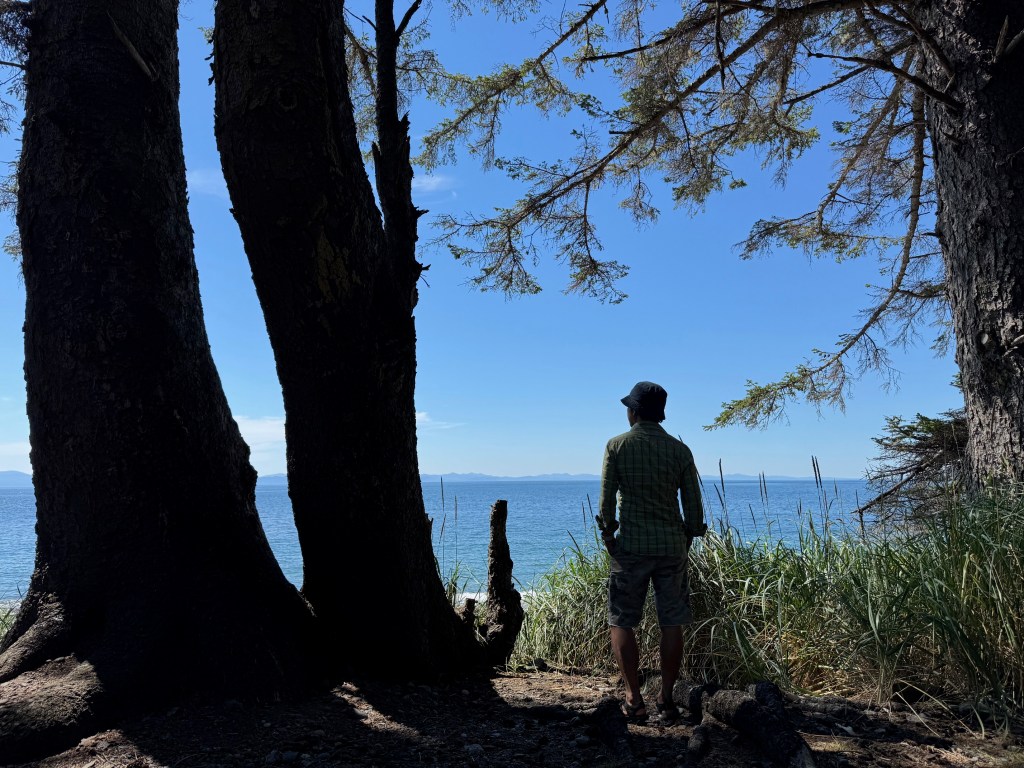
This weekend, with my husband and brother, I followed the Pacific’s different moods along Vancouver Island. In Victoria, the harbour glimmered with lights, music drifting across the water as if the city itself were singing. In Sooke, the inlets lay quiet and reflective, their surfaces so still they seemed to hold secrets. In Tofino, the beaches stretched wide, waves unfurling endlessly as surfers carved fleeting arcs. And in Port Renfrew, the ocean revealed its working face: on the pier, people gutted fish and rinsed their boats, the air thick with the smell of salt and scales. It was not spectacle, but labour—water as partner, as livelihood.
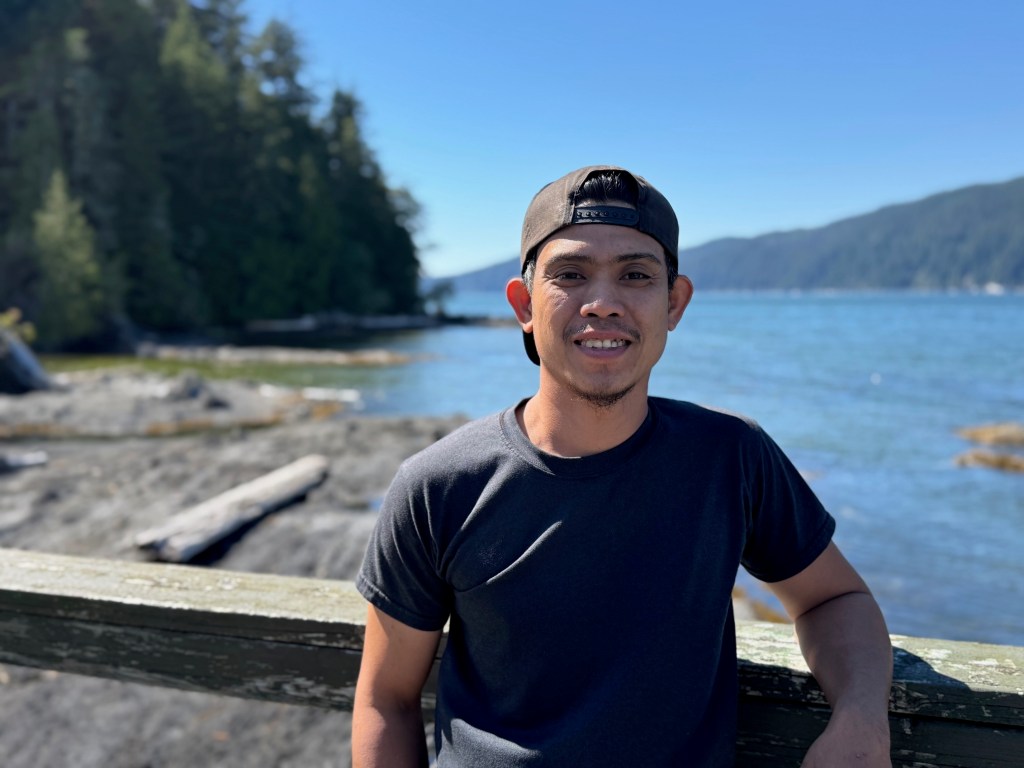
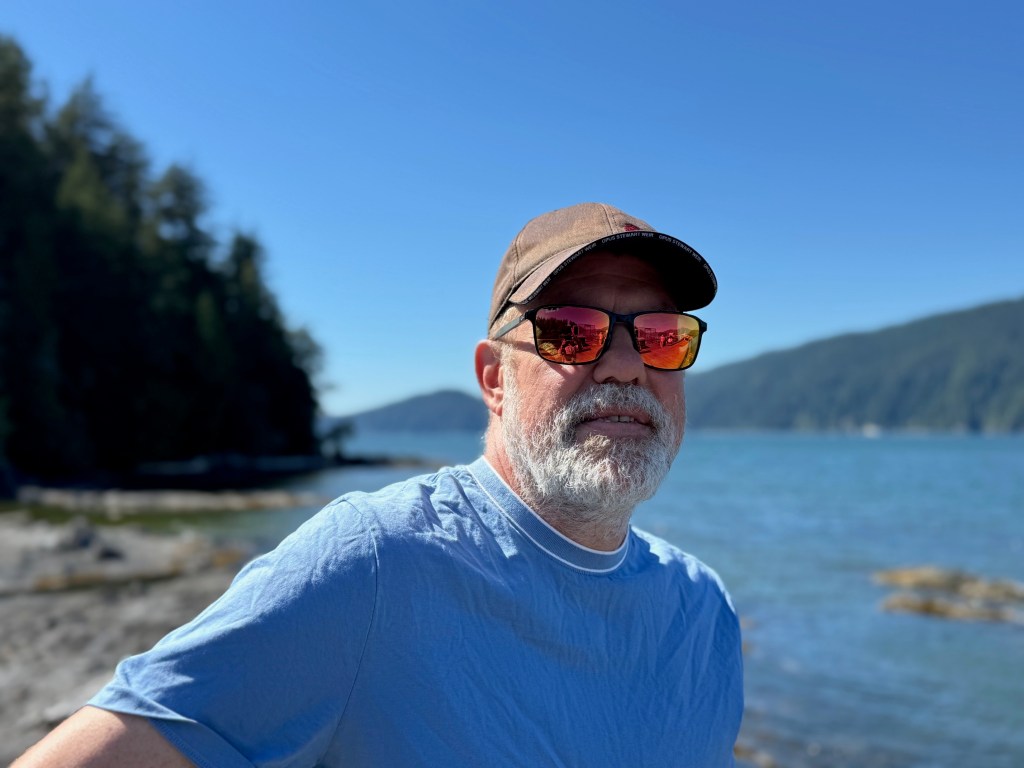
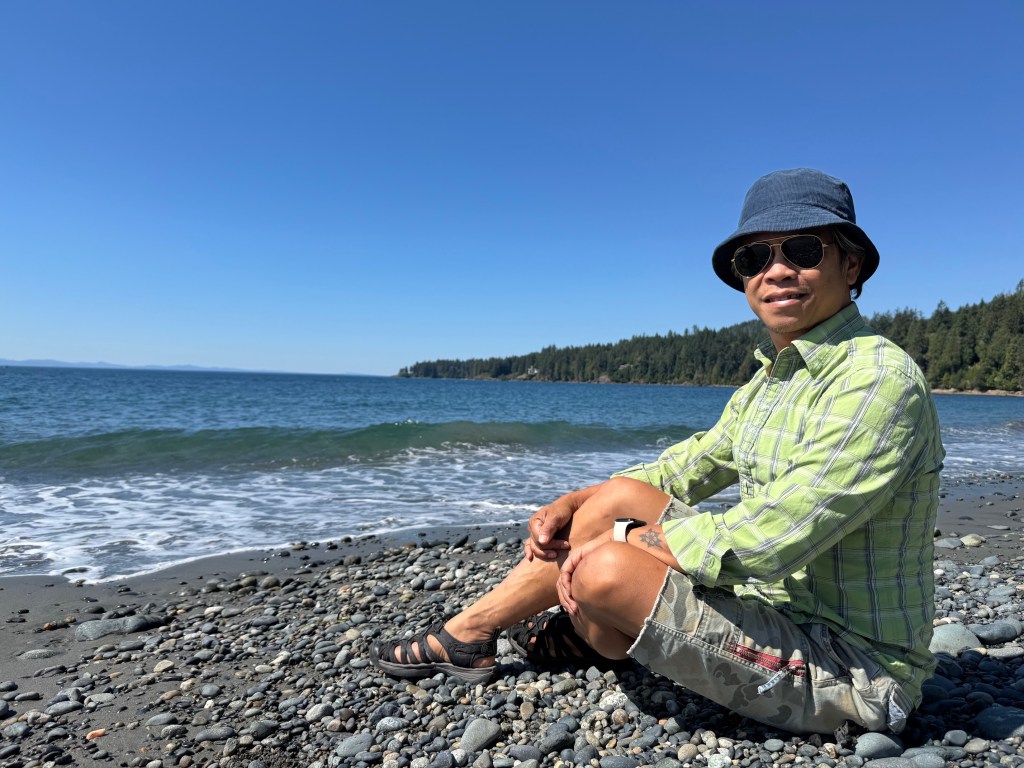
Each place spoke in a different register, yet together they echoed the waters of my homeland. Tofino’s vastness returned me to Cavite’s afternoons of children shrieking in the surf. Port Renfrew’s pier brought back Calauag, where fishermen slipped out into Lamon Bay at dusk and returned in the morning, nets heavy with sardines or mackerel. Even Sooke’s calm inlets carried the hush of home, the sense that water always holds more than it shows.
For me as an artist, water is never backdrop. It is bloodline, exile, and return. On these shores, I am reminded that the Pacific does not separate me from home—it keeps me tethered. Wherever I stand, its tides whisper: you belong to both sides. Every shore is a remembering shore.

 Renato Gandia