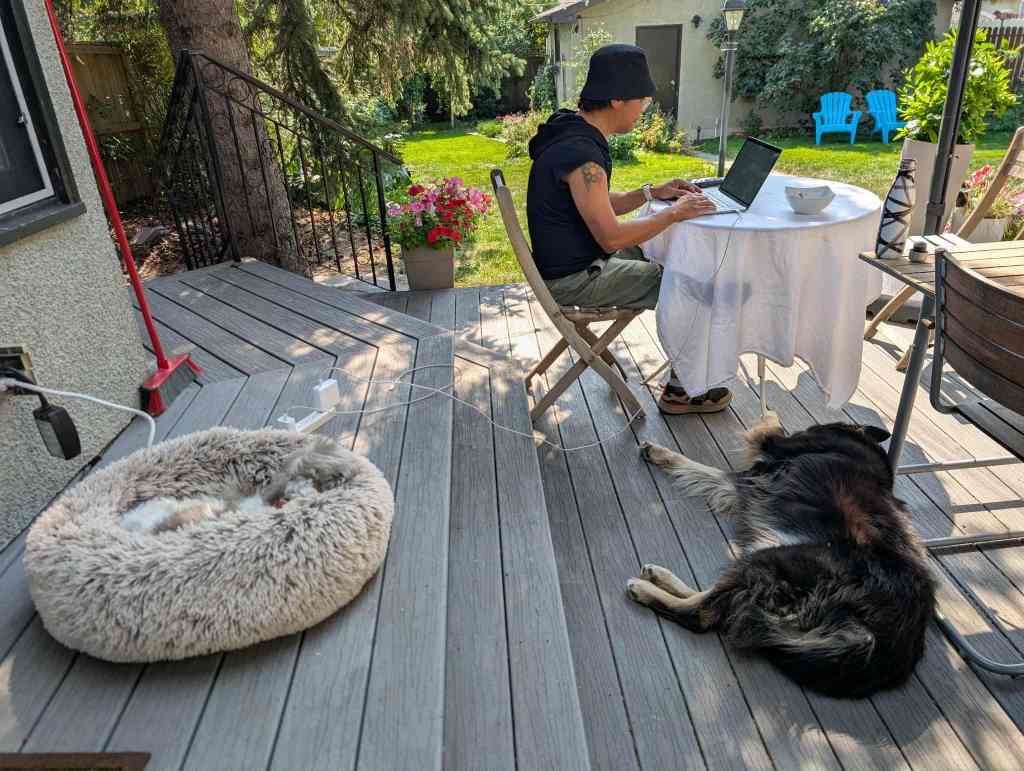
While many people were squeezing the last drops of summer from the Labour Day long weekend, I was in my sunroom, surrounded by notebooks, coffee mugs, and the soft hum of my laptop. I had signed up for Anvil Press’s 3-Day Novel Contest, an infamous literary marathon where writers across Canada (and beyond) attempt the nearly impossible: drafting a novel in seventy-two hours.
The premise is simple, the execution anything but. At midnight on Friday, you begin. By midnight on Monday, you must have a complete draft—a beginning, middle, and end. Some participants treat it like a stunt, others like a rite of passage. For me, it was both an experiment and a commitment: a test of endurance, yes, but also a leap of faith in my ability to surrender to the story.
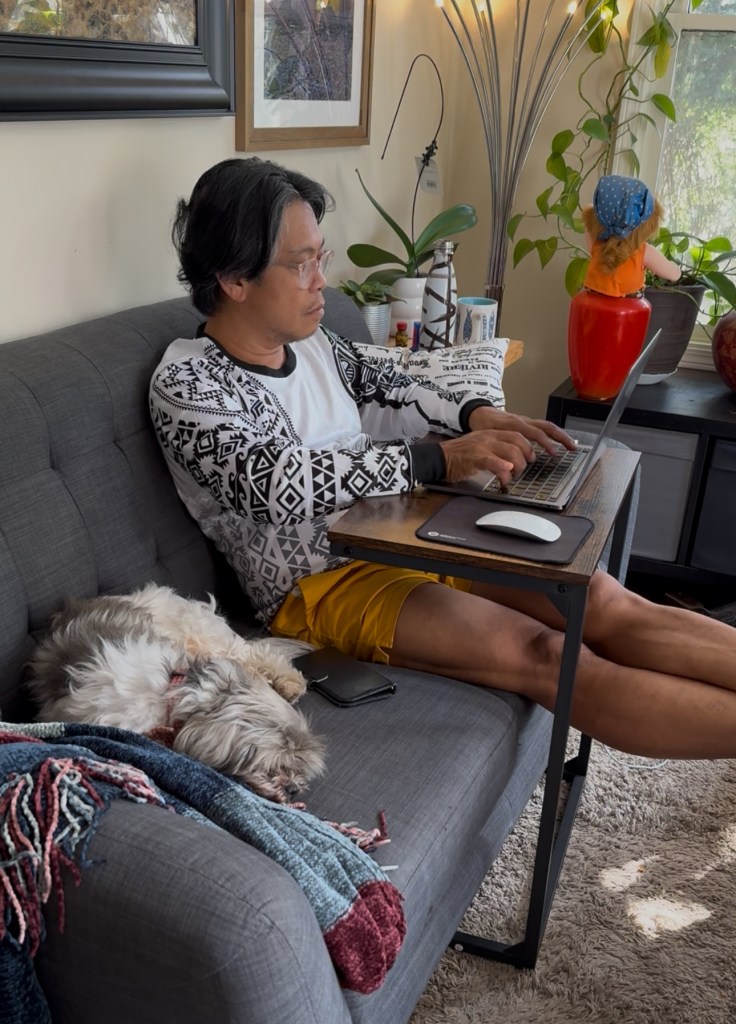
I was grateful that I had been able to do some prep work before the contest began—determining the premise, sketching out the MDQ (Major Dramatic Question), and drawing a few rough character outlines. That groundwork gave me a compass for the long weekend ahead. Still, once I began writing, the characters often dictated how they wanted to respond to the challenges in the story. Their voices, sharper and more insistent than my plans, pulled me in directions I hadn’t expected.
By Monday night, I had written The Last Family Portrait, a 28,700-word, 103-page novella about a Filipino family in Calgary who spend one final weekend together before selling their house. It’s a story about memory, love, and the complicated ways families hold on and let go. The manuscript is rough, yes, but it has a heartbeat—and for now, that is enough.
What I didn’t fully anticipate was how much the contest would become not just my project, but ours. My spouse, Boyd, was with me every step of the way. He understood instinctively what I needed: long stretches of uninterrupted time to lose myself in the draft, balanced with reminders that I am human and not just a machine producing words. He kept the house running smoothly, gave me the space to work, and then gently coaxed me out of it at intervals.
Sometimes it was as simple as a walk around the block. Sometimes it was him setting down a cup of coffee beside me without a word. Sometimes it was his question—soft, almost offhand—“Do you want to go outside for a bit?” His presence was a steady anchor, and though the novel bears only my name, it was in many ways a collaboration. The scaffolding of his care held up the frantic energy of my writing.
The second day of the contest coincided with Calgary’s Pride Parade. We talked about whether I could afford the time away from the manuscript. In the end, there was no question: Pride mattered. Being present together in that space was as important as any scene I could write. But attending meant I had to find another way to meet the word count. So, I woke at 4 a.m., the world outside still cloaked in quiet darkness, and began typing.
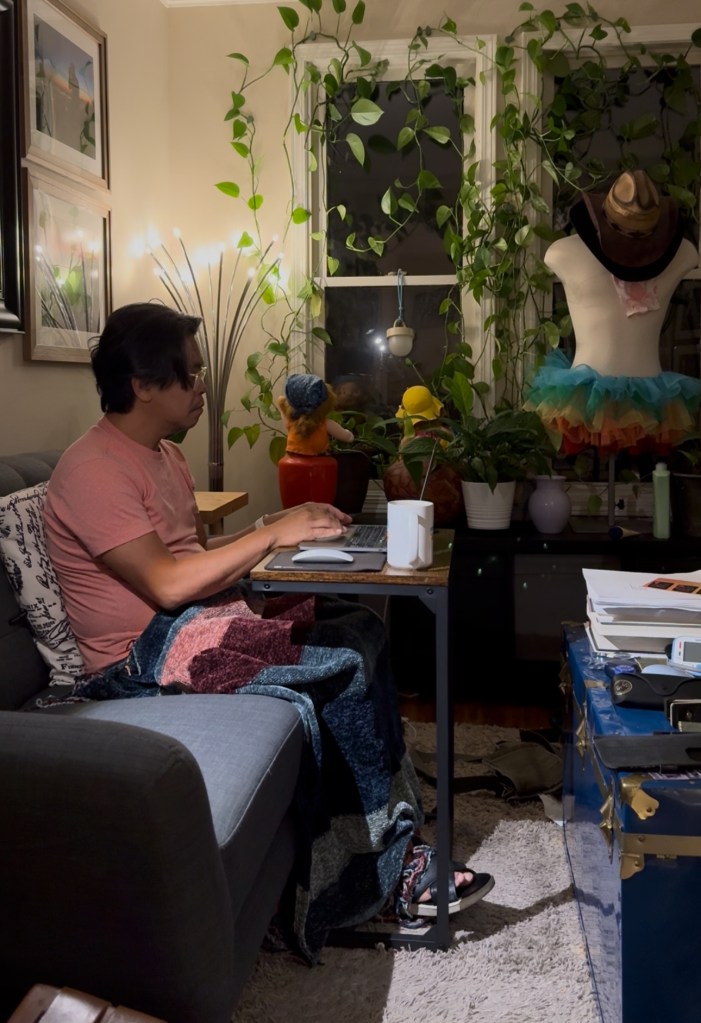
There was something almost mystical about those hours. While the city slept, I slipped deeper into my characters’ lives. The stillness sharpened my focus; the fatigue blurred the edges of self-consciousness. I wasn’t thinking about sentence perfection or plot holes. I was simply writing, one word tumbling after another. It was the purest form of flow I’ve experienced in years.
By the time Monday arrived, I was spent. My eyes ached from staring at the screen, my wrists protested every keystroke, and my mind buzzed with exhaustion. But as I typed the final sentences and scrolled back through the pages, what I felt most was a deep, quiet joy. I had done it. I had pushed past the hesitation and doubt that usually slows me down. I had trusted the story to carry me, and it had.
Will The Last Family Portrait ever make it into print? I don’t know. Perhaps it will remain a scrappy 3-Day draft, raw and unpolished but true to its moment. Or perhaps I will return to it later, shaping and sanding its rough edges until it stands as a finished book. For now, the draft is a reminder that stories don’t always need perfect conditions. Sometimes they just need time, trust, and a willingness to leap.

What I take away most from the contest is not the word count or even the manuscript itself, but the reminder of why I write: to inhabit a world fully, to wrestle with its contradictions, and to emerge changed on the other side. And just as importantly, to be reminded that writing, though solitary in its practice, is never truly solitary. It is shaped by the people who stand beside us, who believe in us enough to say: keep going, I’ll walk with you when you need a break.
So, here’s to the contest. Here’s to the story that surprised me, the characters who kept me company, and the partner who brewed the coffee, nudged me outdoors, and sat beside me at Pride before I returned to my desk at dawn.
Three days. One novel. And the memory of a weekend I’ll carry with me long after the words have settled.

 Renato Gandia