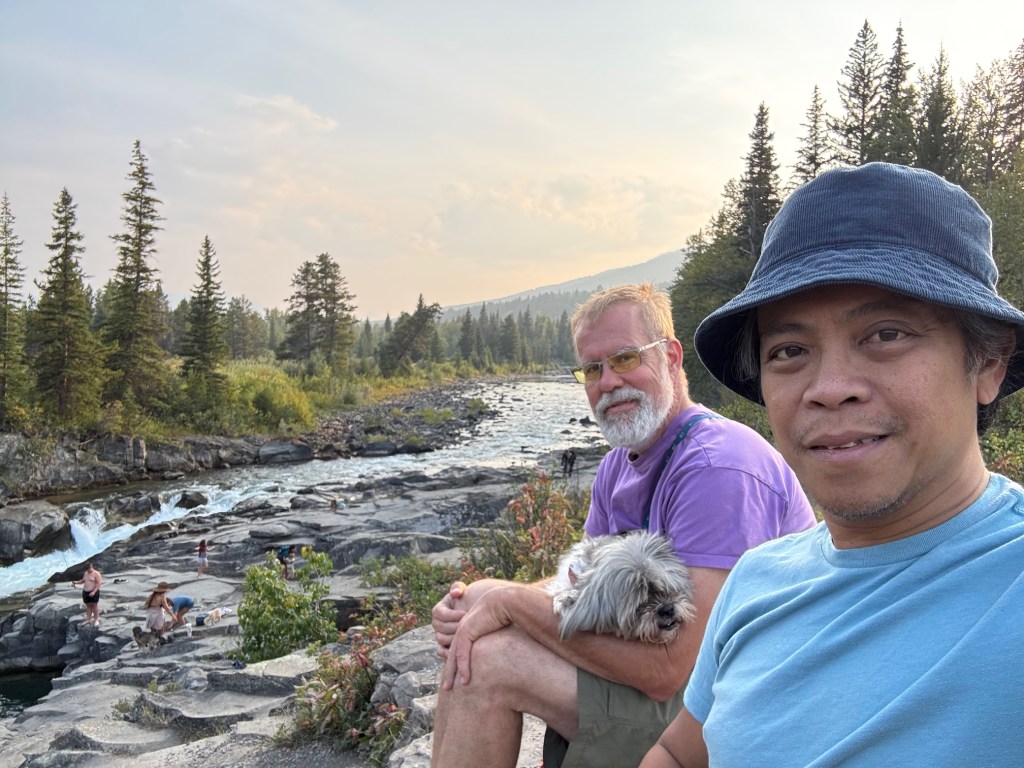
The trouble with writing—or with living, really—is that the noise never stops. Phones pulse with demands, screens flare with urgency, and the world insists on filling every quiet moment. Even when I try to write, the static follows me, cluttering the page. I didn’t realize how heavy that noise had become until my husband and I left it all behind for a weekend in the mountains.
We drove south from Calgary into Castle Provincial Park, tucked in Alberta’s corner near the mountains that rise like an untamed wall. The road narrowed into gravel, the kind that rattles your bones, shakes loose your thoughts, and tells you that you’re leaving something behind. There’s no electricity at the campsite, no plugs to charge a phone or laptop, no bars of signal to tether you back to the busy world. It was exactly what I needed, though I didn’t quite know it yet.

The campground sat close to a waterfall and a river that kept their own music, rushing and tumbling day and night. It was never truly silent, but it was the kind of sound that clears the mind instead of filling it. Water doesn’t demand your response the way notifications do. You don’t owe it anything but your listening.
I didn’t write while I was there. I didn’t even bring a notebook. Instead, I sat by the waterfalls and let myself be still. I breathed in the sharp scent of pine, listened to the rhythm of the water, and felt the damp air cool against my skin. For once, I wasn’t trying to capture the experience. I was simply in it.
Days stretched unhurried. In between quiet hours by the river, we loaded our canoe and went paddling at nearby lakes. At Lee Lake, the surface lay smooth as glass, disturbed only by the dip of our paddles. At Beauvais Lake, trees lined the shore and mirrored themselves in the water until the wind sent ripples across their reflection. Out there, the world shrank to the rhythm of our strokes, the gentle give of water, and the occasional call of a bird. We spoke little, not because there was nothing to say, but because silence felt like its own conversation.
Canoeing reminded me of writing, though not in the way I expected. Progress comes not in grand gestures, but in small, steady strokes. You keep pulling, keep adjusting, and the shore eventually shifts. There is effort, yes, but also surrender—to the current, to the balance, to the shared rhythm of two people moving as one.
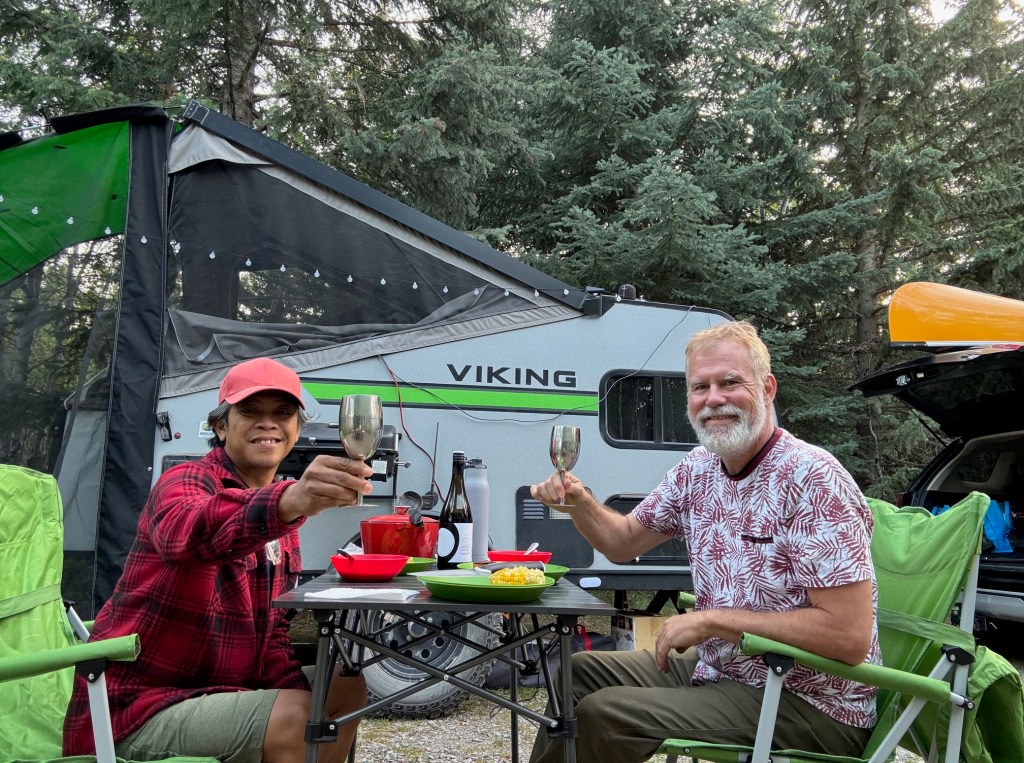
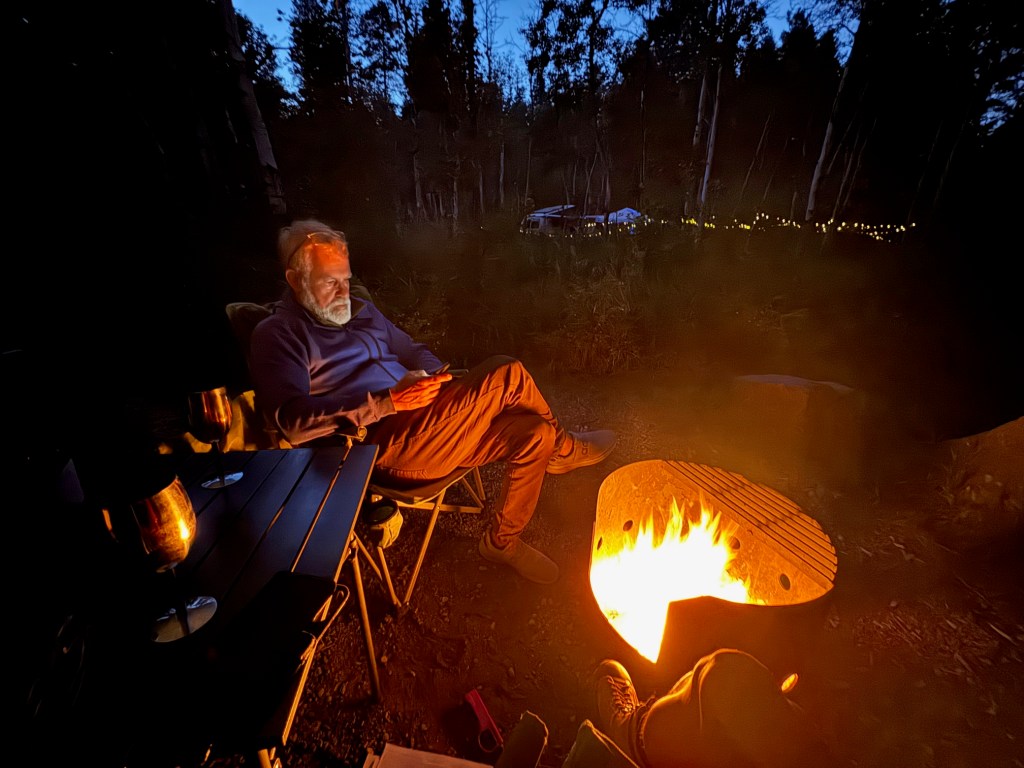
Back at the campsite, evenings gathered around the fire felt timeless. Sparks rose into the night, the stars unfolded overhead without competition from city lights, and the air cooled enough to make the fire’s warmth a comfort. I thought about how many stories those stars have witnessed, how long the river had been rushing long before I sat beside it. The world holds its own narratives, patient and enduring, whether or not we ever write them down.
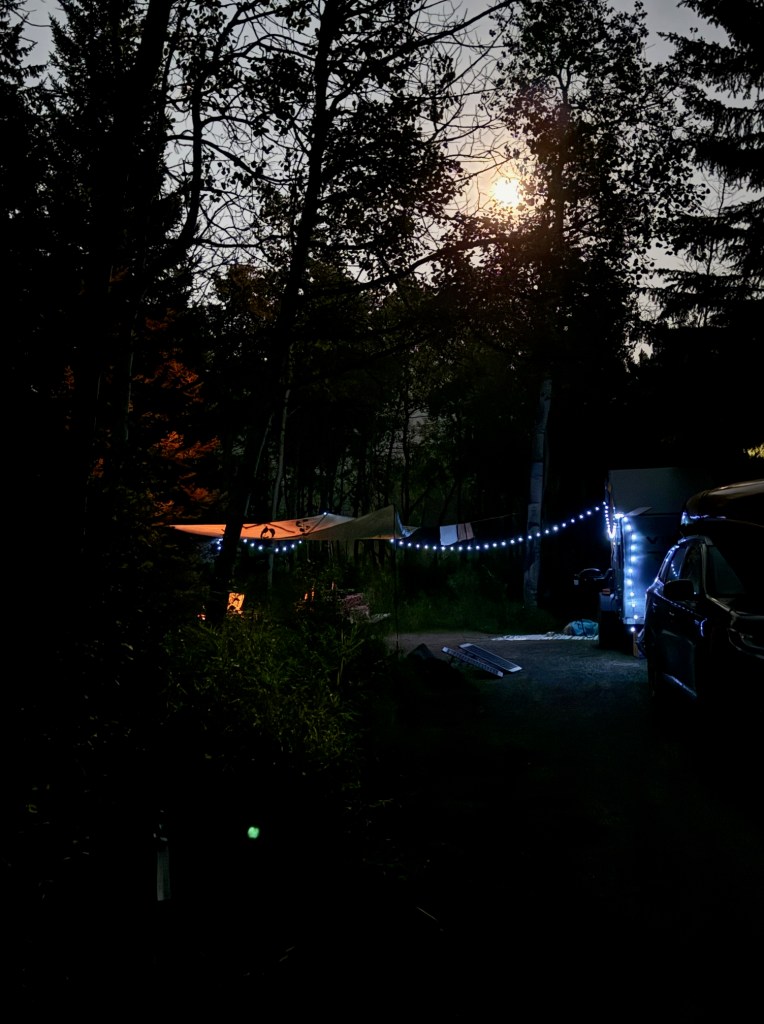
When we returned home, the noise of ordinary life met us right away—emails waiting, traffic pushing, phones buzzing again. But I carried something back with me: the sound of waterfalls still echoing in my ears, the rhythm of paddles cutting into a lake, the smell of pine stitched into memory.
I didn’t come home with a finished chapter or a solved plot problem. Instead, I came home with space. Breathing room. The reminder that creativity doesn’t always happen at the desk. Sometimes it begins by stepping away from it. Sometimes it begins by being fully present in a forest, by a river, under a sky thick with stars.
Silence, I realized, isn’t an absence. It’s a presence. And sometimes, the best thing a writer can do for their work is to stop writing, power down the phone, sit by a waterfall, and simply listen.

 Renato Gandia