
Years ago, I stopped writing poetry. A friend—a poet himself, patient with me for forty-eight hours of trying with no sleep—finally gave up. He told me I just couldn’t write poems. He didn’t mean it cruelly, but the words lodged themselves in me. For a long time afterward, I would still scribble lines, but almost always I deleted them or tore the page in half.
It was easier to believe I had no right to write poems than to risk keeping them.
When I think back to that time, what strikes me most is not the silence of others but the silence I imposed on myself. I despaired—not in the dramatic sense of hopelessness, but in the way Gabriel Marcel describes despair: as refusal. To despair is to withdraw fidelity from being, to say: there is no point, no meaning, no faithfulness left to keep. I refused myself the possibility of poetry before the words had even had a chance to breathe.
Marcel’s Metaphysics of Hope offers another way. For him, hope is not optimism. Optimism is the cheery forecast that things will turn out fine. Hope is harder, quieter, more radical. It is fidelity—a stubborn loyalty to existence, to being itself, even when evidence offers nothing but silence.
Applied to writing, hope is what keeps a writer returning to the page without guarantees. Not the guarantee that a draft will be good. Not the guarantee of acceptance or recognition. Hope is what steadies the hand anyway, whispering that the act of writing matters in itself, because to betray the page is to betray a part of one’s own being.
Looking back, I realize that even in those years when I ripped poems apart, some flicker of hope must have remained. If I truly had none, I wouldn’t have written them in the first place. Each torn page was paradoxically a testimony: I still wanted to write, even if I was afraid to keep the words.
Marcel also insists that hope is never solitary. It is always for and with the other. That challenges me as a writer. When I write, I’m not only practicing fidelity to myself but to the reader I may never meet. To continue writing is to act in hope for someone else’s recognition, someone else’s need, even across years or continents. To write is to trust that language might reach another human being, even when silence and rejection say otherwise.
This is why rejection slips and unanswered submissions, while painful, do not erase hope. If anything, they sharpen it. Hope isn’t measured by outcomes but by persistence: by the choice to keep writing, to keep submitting, to keep faith that words can still carry meaning.
Sometimes I think about Niles, my oldest writing friend, who has gone on to become an award-winning poet and novelist. For a long time, I wondered if I had failed where he had succeeded. But Marcel’s metaphysics suggests another reading: Niles’s fidelity to his writing does not diminish mine. Hope is not a competition. It’s a shared mystery, something each of us participates in differently.
Marcel called hope a mystery because it cannot be solved or proved. It can only be lived. For me, that mystery unfolds word by word, line by line. Every time I return to the page, I resist despair. Every time I finish a story or hold back from tearing up a poem, I choose fidelity to being.
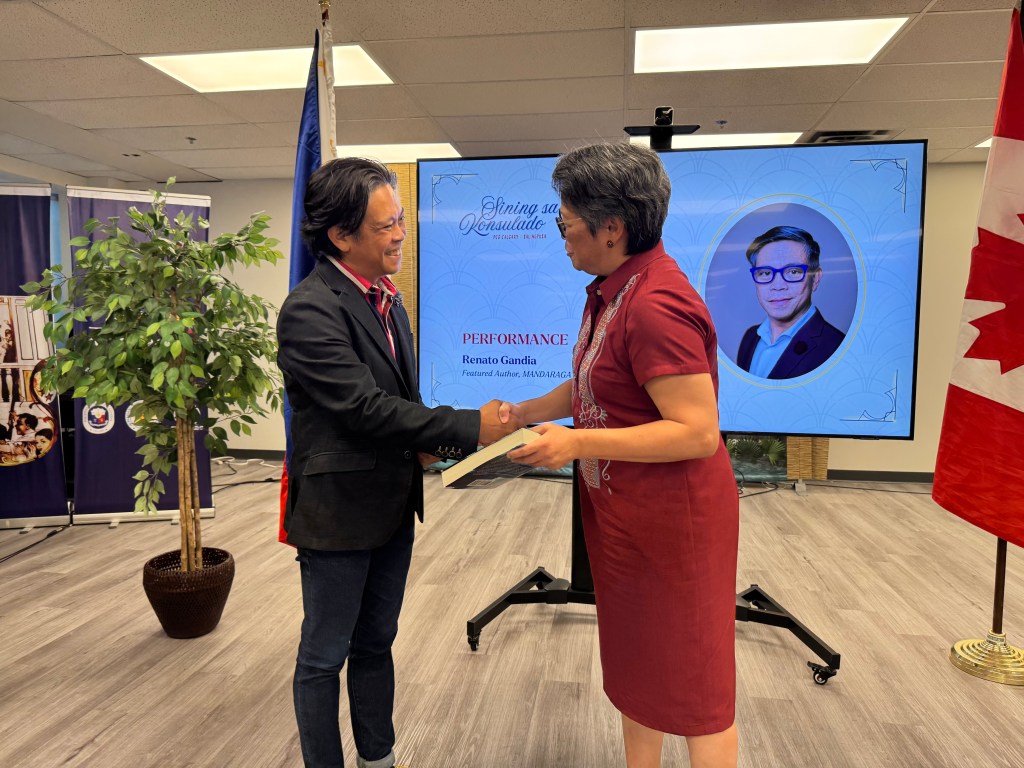
These days, I even read my poetry in public. At the Sining sa Konsulado in Calgary, I stood before an audience and performed a poem—an act I once thought unthinkable. I did it knowing full well I might put people to sleep or make them shake their heads at whatever gobbledygook I was spouting. And yet, I read anyway. That, too, is hope: to give my words away instead of tearing them up.

Still, I confess, when someone introduces me as “Renato is a poet,” I feel a certain unease. The title feels larger than me, heavier than my words. But perhaps that unease is also part of hope—a reminder that writing is not about certainty, but about fidelity. Hope doesn’t erase doubt; it simply keeps me faithful to the page in spite of it.
Hope, in the end, is not a promise that my words will win prizes or even find readers. Hope is the simple, radical act of saying: I will not give up on words, because words have not given up on me.
And so, I write.
Not because I am certain of success, but because I want to be faithful to the page.

 Renato Gandia