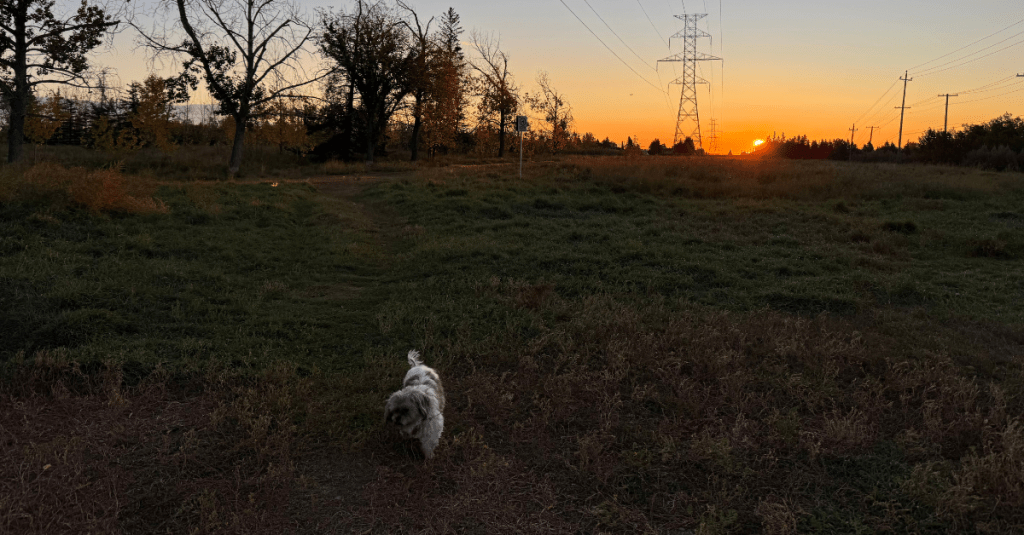
In the first week after losing Marley, I still went to the dog park. Seven a.m., just before dawn—the kind of Calgary morning when the light hesitates behind the skyline and the cold arrives before you’ve even opened the car door. As usual, I stopped for a latte first. I always did. Marley wasn’t a back-seat kind of pup; he rode shotgun, head resting on the console, watching me, taking in every light and scent along the way. At the drive-through, he’d fix his gaze on the barista, convinced that any good human would hand him a treat and give him a pat. I still order the same drink, partly out of habit, partly to keep the day from feeling too foreign.
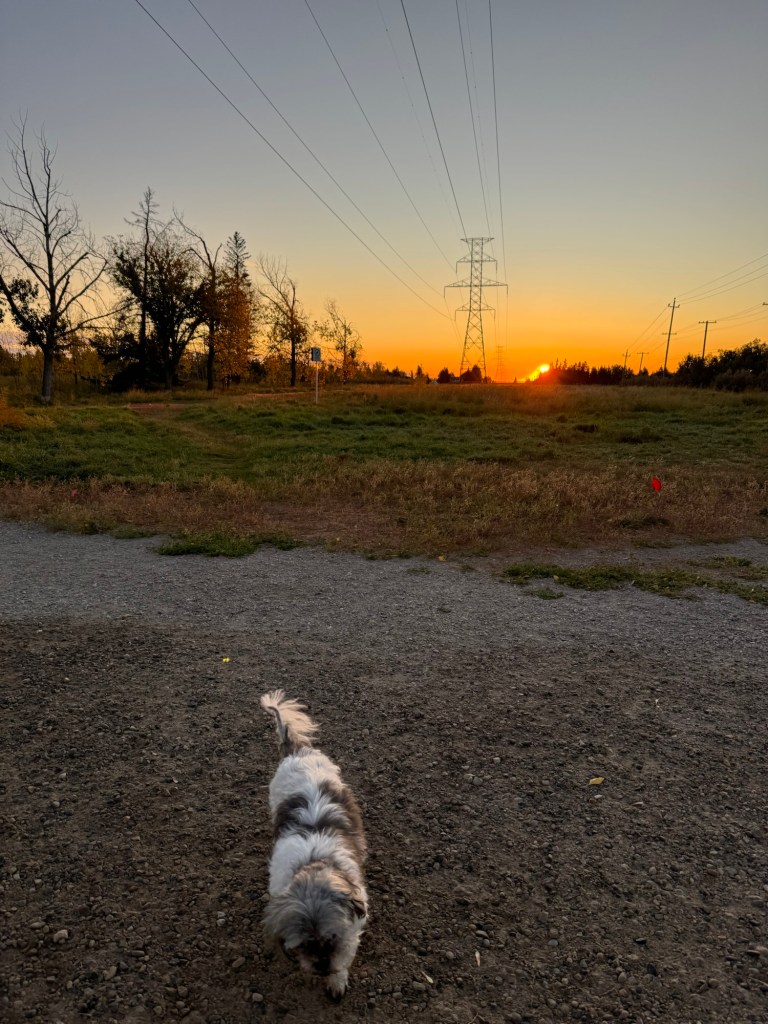
We used to joke that Marley had his own parking spot at the park that faces the Elbow River and downtown Calgary. It’s an open field, not gated, where the city looks soft in the early light. This morning, the spot was empty, waiting. Familiar vehicles lined the south edge of the park, though the people and dogs we knew were probably deep into the green space. I had hoped to see them, to tell them about Marley. Maybe I thought that speaking his name aloud to someone who knew him would make the loss more bearable—or at least more real.
Instead, the park greeted me with quiet. The grass was silvered with frost. Steam from the river billowed, unhurried. I sat for a moment, hands around my cup, and watched as the first dog bounded into view—a golden retriever chasing a stick, his person half-awake behind him. A pang, sharp and fleeting, ran through me. The scene was so ordinary, so exactly what Marley and I used to be, that it felt almost cruel in its normalcy.
I thought about how grief rearranges your mornings. How the body keeps its old rhythm even after the heart has lost its reason. For years, the routine was simple: latte, drive, walk, joy. Now, I still drive, still order the coffee, but the joy lags behind. Grief, I realize, is a form of muscle memory. You keep doing what love trained you to do until the body finally accepts that the companion who taught it those movements is gone.
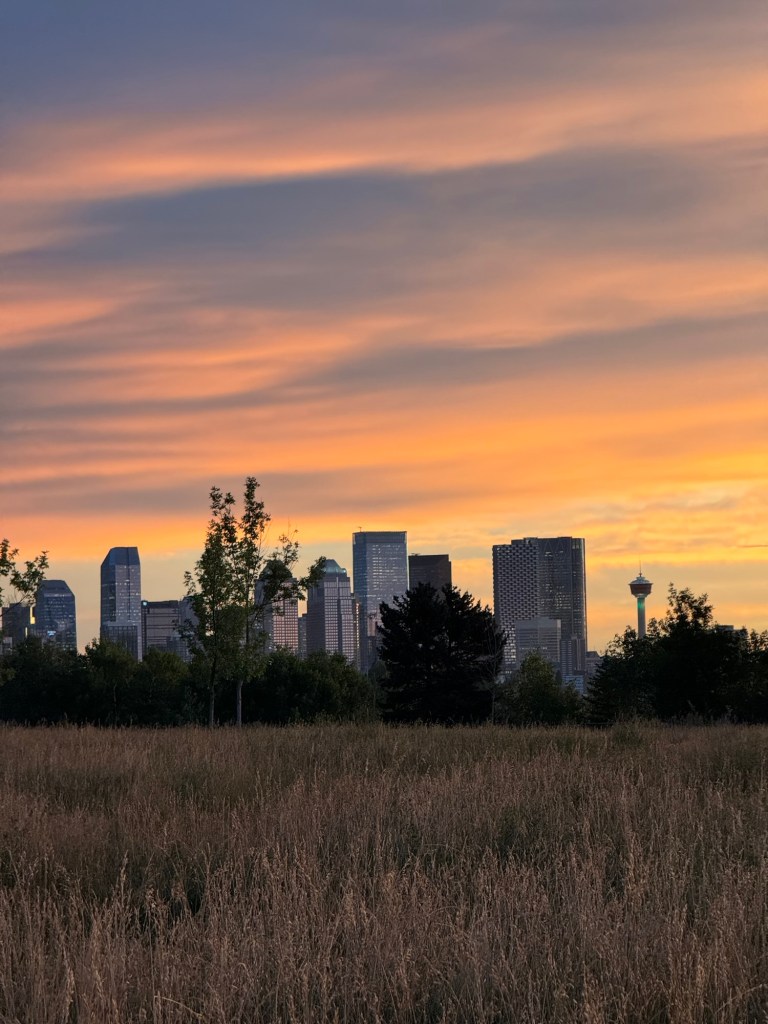
As the light began to stretch over the river, I walked toward the overlook where Marley liked to stop and sniff the air. From where he stood, a brush blocked the city skyline, but I could see downtown—steel and glass just beginning to glow. I used to think he loved this park for its space, the freedom to run. Maybe it wasn’t the view at all. Maybe, like me, he sensed something sacred in those open city mornings when the world hadn’t yet decided who it was going to be.
Even without him, I could trace his movements—the spots where he’d pause, where he’d roll, where he’d sit and watch every passing creature. There’s a man who’s known Marley since we first started coming here; he lost his own dog two years ago. I wanted to see him, to tell him about Marley.
Places remember for us. They hold the shape of what we’ve loved. Maybe that’s why I came back—to see if the park would remember him for me. To test whether joy leaves an imprint on the ground, like paw prints that never quite fade.
I stayed longer than I meant to. A few people passed by with their dogs, offering polite nods. No one asked where mine was. I didn’t mind. Maybe the telling can wait. Maybe grief doesn’t need an audience every time it speaks. Yet I know that one day I’ll run into someone who knew him, and I’ll say his name, and we’ll trade stories—how he once refused to move from the passenger seat when I parked, or how he’d insist on greeting every dog as if hosting them in his own park.
Memory, after all, is a communal act. To tell someone about Marley isn’t to inform them—it’s to keep him in circulation, to make sure love keeps having witnesses.
When the latte was gone and the sun had cleared the riverbank, I walked back to the car. The parking spot looked the same as it always had. Maybe that’s what grief teaches: the world continues, indifferent yet intact, while you carry the change inside you. The park will fill with dogs again—with laughter and shouts and the whir of leashes being clipped on. And I’ll keep coming, not because I expect to see him, but because this place is part of our story. Because love carves its shape into our routines, and even after loss, we return to trace its outline.
Driving home, I realized it wasn’t strange to go to a dog park without a dog. It was, in its own quiet way, an act of devotion. To keep showing up where love once lived is how we honour it. Marley’s parking spot will always be there, waiting under the fall sky, the river beginning to freeze. And maybe that’s enough—for now, for this morning, for the kind of grief that doesn’t ask to be solved, only witnessed.

 Renato Gandia