When Cecilia Ortiz Luna first reached out to ask if I would help her revive Salingpusa, I paused before saying yes. It wasn’t hesitation—it was awe. I knew the name carried weight in Calgary’s Filipino-Canadian arts community: a magazine born out of the desire to give voice to writers and artists who often create in the margins. To be invited to help bring it back felt both humbling and urgent.
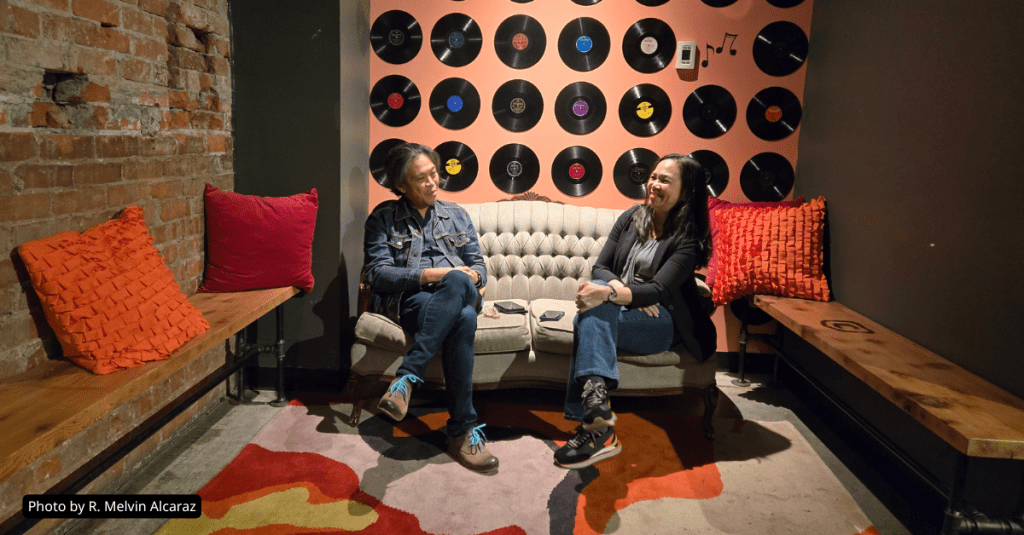
I first met Cecilia at a poetry workshop earlier this year, where we were both panellists. Known in Calgary’s Filipino-Canadian arts community as a tireless advocate for emerging artists and cross-disciplinary collaboration, she had a warmth that immediately put people at ease. After our session, she told me she had read my piece in Magdaragat: An Anthology of Filipino-Canadian Writing. She said it stayed with her—the kind of comment that lands not just as flattery but as recognition.
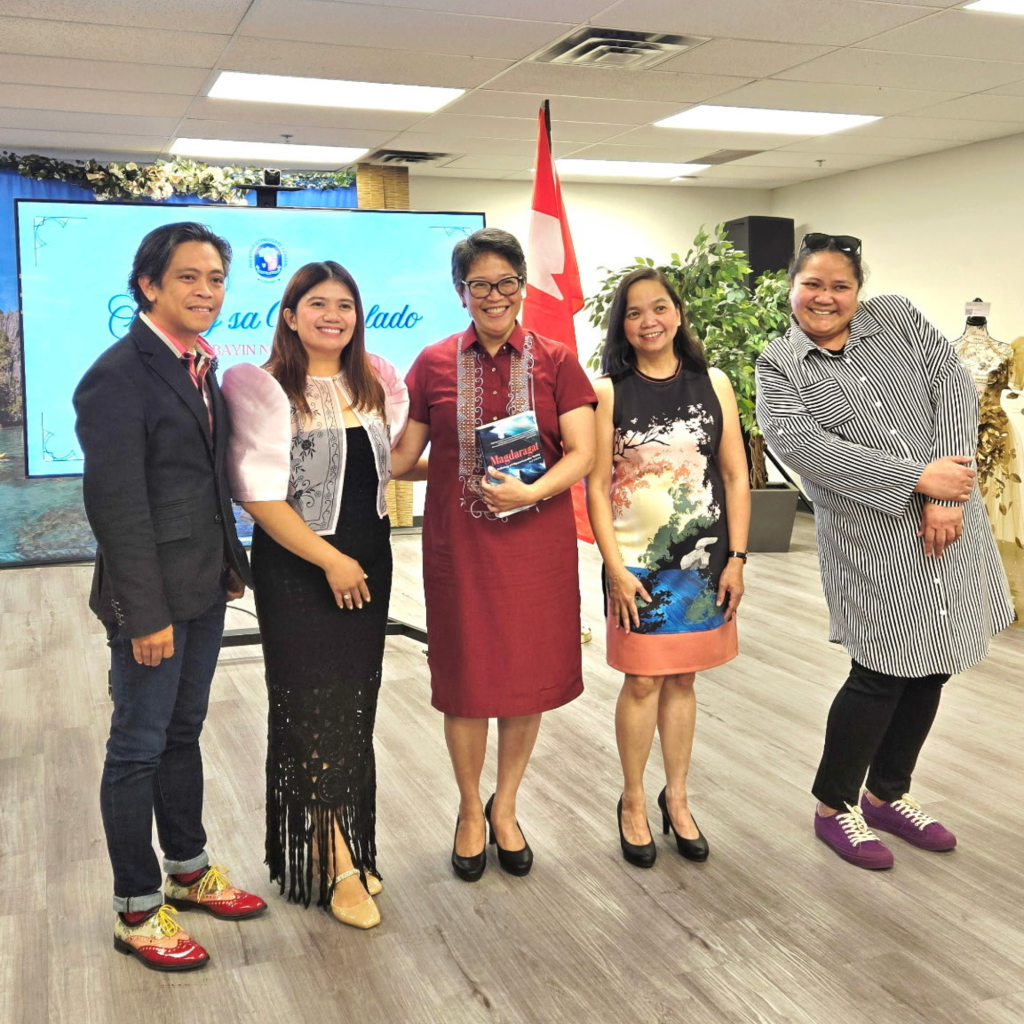
After that event, she invited me to attend a grant-writing workshop she was facilitating. From there came another invitation—to participate in the second Sining sa Konsulado—and eventually, the one that invited me to give back: would I be open to helping her revive Salingpusa Magazine?

I said yes because I understood what Salingpusa stands for. The word itself means the “uninvited”—a child who slips into a game not yet called but belongs the moment they start playing. That spirit—of entering, belonging, creating together—is what animates Filipino artists across borders. Many of us make art in a space between homes, between languages, between systems that were not built to see us. Salingpusa has always been a gathering place for those in between.
Stepping into the managing editor role, I see both the beauty and the challenge of that mission. A community-based magazine thrives on generosity: of time, of skill, of spirit. Everyone contributes because they believe in the work, not because they’re paid to do it. That belief creates energy—but it also means sustainability must be earned through structure and care.
My professional background in media management and communications gives me a certain fluency in process—deadlines, workflows, editorial calendars. But a community arts magazine demands something deeper: patience, empathy, and the ability to listen across artistic disciplines. We’re not just editing pieces; we’re cultivating relationships. Each submission carries the vulnerability of someone saying, “Here’s my story. Will you make room for it?”
That question—will you make room?—feels like the heart of our work at Salingpusa. For me, the answer must always be yes, though the “how” requires ongoing discernment. Making room doesn’t mean lowering standards; it means building an editorial culture that mentors rather than gatekeeps, that values voice and experiment as much as polish.
One of the biggest challenges I foresee is balancing our dual commitments: maintaining artistic excellence while remaining accessible to emerging creators. We want to publish works that push boundaries and hold their own in any literary context, but we also want to welcome those still finding their voice. That tension is productive—it keeps the magazine alive, evolving.
There’s also the question of relevance in the digital age. Reviving Salingpusa now means thinking beyond print or PDF: how do we make it a living digital magazine that feels current and communal? How do we showcase visual art, poetry, short fiction, and multimedia in ways that invite participation rather than passive consumption? Our “Stories of Becoming” theme for the relaunch issue is a fitting place to start. It reminds us that both the magazine and the people behind it are works in progress.
Personally, this role asks me to balance two selves—the writer and the editor. The writer in me craves solitude; the editor seeks connection. I’m learning that the two can coexist. Editing others’ work sharpens my own writing and broadens my empathy. It reminds me that storytelling is never solitary—it’s built on dialogue, mentorship, and trust.
As I look ahead, my vision for Salingpusa is simple but ambitious: to make it a space where Filipino and Asian-diaspora artists in Canada can see themselves reflected with dignity and complexity. A space that celebrates experimentation while staying grounded in community values. A space where readers feel not just represented but moved.
We are already seeing this energy take shape. Contributors, designers, and editors are exchanging drafts late at night, offering feedback with the warmth of old friends even if they’ve never met in person. In group chats, ideas bounce between time zones—proof that creativity, like migration, knows no fixed border. That’s the beauty of a digital magazine—its community lives and grows online, reaching far beyond Calgary or Canada.
Reviving a magazine is ultimately an act of faith. You trust that stories, when shared with sincerity and skill, can build bridges stronger than geography. You trust that community, however dispersed, can still gather around words and images that affirm who we are and who we’re becoming.
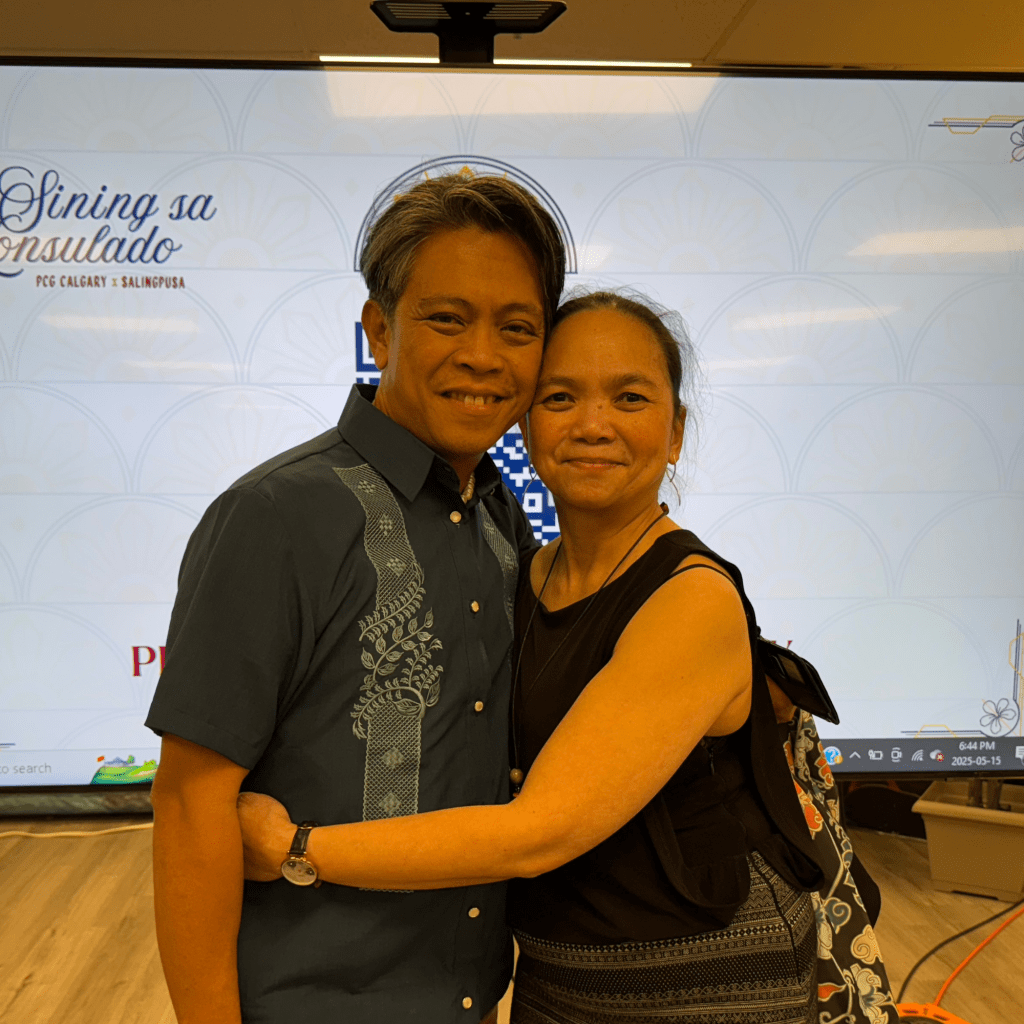
When I think about what this role means to me, I return to that first conversation with Cecilia—two writers, talking about a piece that resonated across pages. That exchange was small, but it carried the same spark that fuels Salingpusa: recognition, connection, and the belief that our stories deserve space.
Taking on this role isn’t just about managing a magazine. It’s about tending a home for creativity—a home built on the collective imagination of those who once entered the game uninvited but now lead it forward. Even without print pages, Salingpusa continues to build real connections through its digital home—a gathering place without walls, always open to those who seek belonging through art.

 Renato Gandia