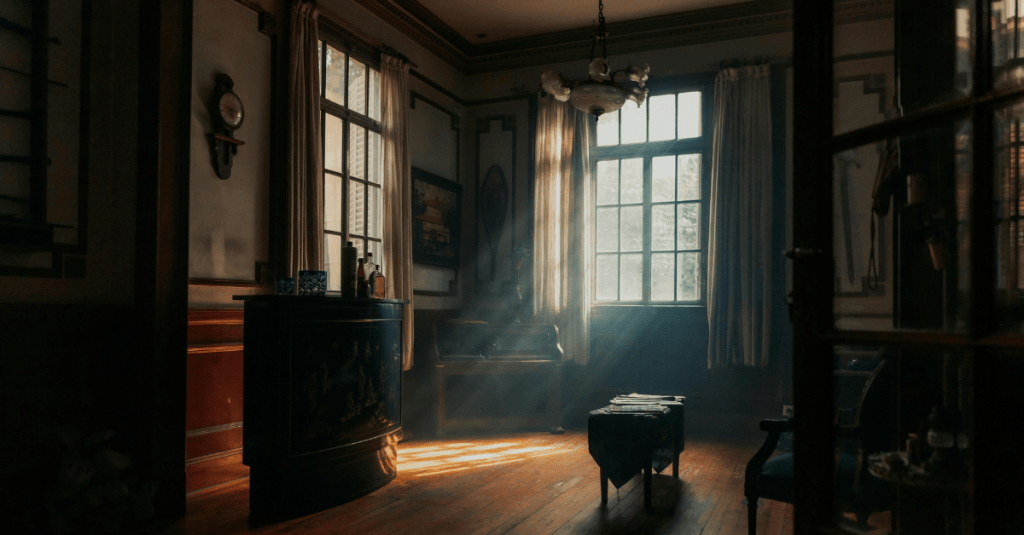
There is a certain quiet that arrives only in the moment of pag-uwi—that suspended breath between leaving and returning, between who you were in the wide world and who you must become the instant you step across a threshold. Pag-uwi is not merely an arrival. It is an act burdened with memory, expectation, and the weight of every silence we were trained—sometimes lovingly, sometimes harshly—to carry.
When I think of pag-uwi, I don’t picture a door or a house. What returns to me first is a question: What face do I bring back with me? And whose face am I expected to wear?
Part of this comes from the fact that I spent thirteen years of my life in seminaries—years shaped by prayer, study, discipline, and the constant act of becoming. A seminary is, in many ways, a house of thresholds. You are always leaving one self behind and returning as another, though rarely in ways you can name.
And although I never became a priest, I want to be honest: I didn’t arrive at peace easily. I wasn’t unbothered from the beginning. For much of my life, the priesthood wasn’t just a dream—it was the dream, the shape around which I built my hopes, my identity, even my understanding of purpose. Letting it go felt, for a time, like a small death.
But grief has its own slow intelligence. Over the years, through migration, through writing, through friendships that held me gently, I learned to see my journey not as failure but as maturation. I grew into the life that kept insisting itself into my hands. And now, when I look back, I carry no bitterness—only the quiet recognition that formation gave me a vocabulary for interior life, taught me how to listen, and showed me that the heart can repair itself through truth.
But pag-uwi is different from any institutional homecoming. When I left the seminary for weekends or holidays, pag-uwi meant returning to roles I wasn’t sure I fully fit: dutiful son, kuya, the seminarian the whole neighbourhood could be proud of. In those moments, silence wasn’t emptiness—it was performance, duty, self-protection. It was, to borrow from Gabriel Marcel, “the mystery of being with others while guarding the trembling truth of oneself.”
When I migrated to Canada, I discovered that English offers no real equivalent for pag-uwi. “Coming home” is close, but it misses the interiority of the Filipino word. Pag-uwi is a noun, a container—a whole emotional event. It holds longing and obligation, tenderness and dread, hope and the residue of unfinished conversations. It is something you prepare for. Something you rehearse. Augustine might call it a movement of the heart toward its rightful place; Heidegger might see it as a return to one’s dwelling; Buber might call it a turn toward the I–Thou relationship, the face meeting another face in honesty.

Over time, pag-uwi has changed shape for me. It is no longer tied only to the Philippines or to the memory of a house where everyone once knew my childhood voice. Some days pag-uwi is as small as writing a sentence that feels unguarded, a sentence where I stop trying to sound like anyone else. Other days, it’s calling my mother. Or letting myself hope for something without shame. Or remembering the boy I once was—the frightened, earnest, longing boy—and offering him the gentleness the world did not always give.
I’m learning that pag-uwi is less about geography and more about recognition—the moment the self steps toward itself without flinching, without disguise.
Buber once wrote that all real living is meeting. I am beginning to understand that pag-uwi is a kind of meeting too: the moment when the person you’ve become turns toward who you have always been, and there is no reproach, only welcome.
And in every line I write, I hear a quiet whisper beneath the words:
Here. This. You’re home.

 Renato Gandia