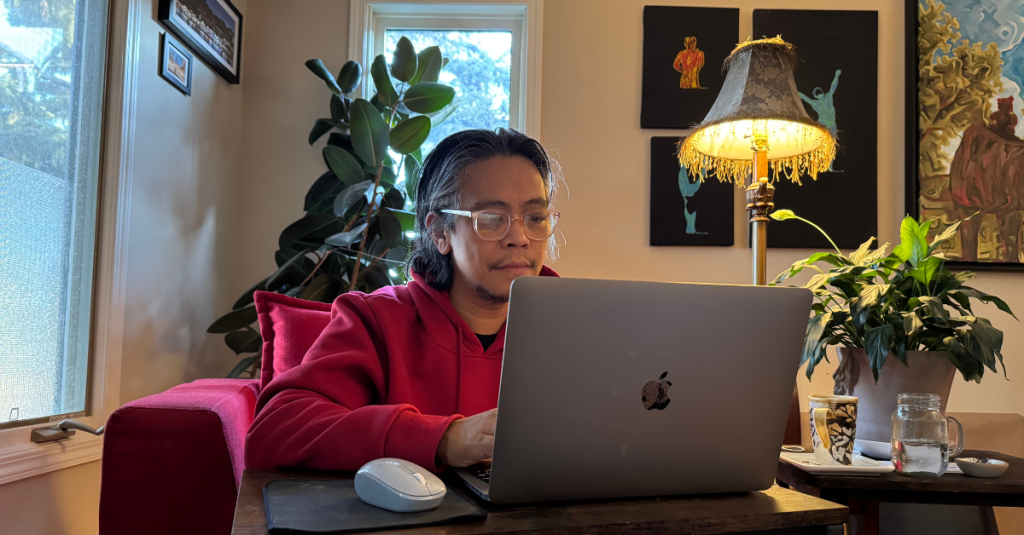
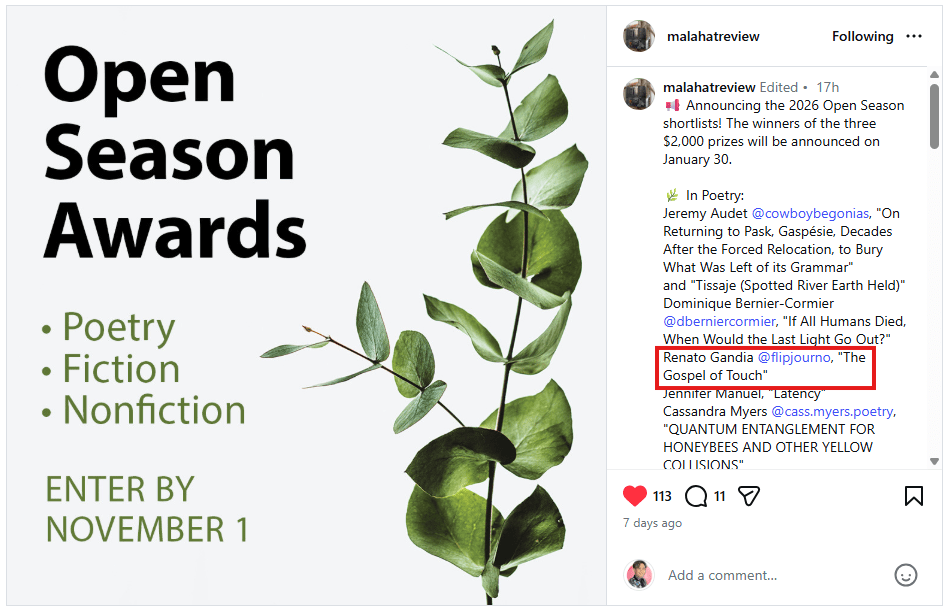
When I learned that I had been shortlisted for the Open Season Award in Poetry by The Malahat Review, my first instinct was not to celebrate.
It was to stay quiet.
Not in a dramatic, vow-of-silence way. More in the practical, self-protective way writers learn over time: if you don’t tell anyone, you don’t have to manage anyone else’s expectations—least of all your own. I even considered not telling my husband, which is saying something, given that he is usually the first person to hear about everything: acceptances, rejections, long shots, near misses.
Being shortlisted is a strange emotional state. It’s not quite joy, not quite fear, not quite dread—but a volatile mix of all three. You are suddenly visible, but not yet chosen. Recognized, but not rewarded. Hopeful, but bracing for impact.
I’ve been writing consistently for more than two years now. Not casually, not “when I feel inspired,” but with intention and discipline: early mornings, weekends, stolen hours after work. In that time, my work has found homes here and there—magazines and anthologies. Each publication feels like a small confirmation that I’m not imagining this vocation, that the work can travel beyond my desk.
And yet, I’m nowhere near my eventual goal: landing a book deal.
In Canada, contests matter—perhaps more than we’re comfortable admitting. The literary ecosystem is small, competitive, and saturated with talent. Contests are one of the few mechanisms that cut through the noise, placing your work directly in front of editors and judges who might otherwise never encounter it. Being shortlisted is a form of exposure, a quiet tap on the shoulder that says: someone noticed.
Which is precisely why it can feel so dangerous.
After sitting with the news for a few hours, I finally told my husband—but not before asking him a careful question: did he have the emotional capacity to support me through what I already knew would be a rollercoaster? The initial high. The waiting. The imagining. And, very likely, the disappointment.
He said yes, of course.
When the results were announced and I didn’t win, the sadness arrived quickly and unapologetically. I didn’t spiral, but I didn’t shrug it off either. Losing—even gracefully—is still losing. There’s a particular kind of grief that comes from getting close enough to touch something, only to have it pulled back.
My husband, ever steady, said something simple:
“Isn’t it nice to be shortlisted?”
It is nice. I know that. I really do.
But I also joked back, “That was so last week. This week, winning is everything.”
The joke landed because it carried some truth. In the moment, winning can feel like the only thing that matters. We live in a culture that treats finalists as footnotes and winners as the story. Even when we intellectually understand that the work doesn’t disappear just because it didn’t take first place, the emotional brain is harder to convince.
Still, time does what it always does: it widens the lens.
I’ve been here before. Last September, one of my short stories was named a runner-up in a short fiction contest by Alberta Views Magazine. At the time, I felt the same mixture of pride and frustration. Close—but not quite. Seen—but not crowned.
And yet, that recognition mattered. It gave the story a longer life. It gave me confidence when I needed it. It reminded me that the work could stand up in a competitive field.
So what is winning, really?
Sometimes winning is the prize money and the announcement and the brief, dazzling spotlight. But sometimes winning is quieter: your work holding its own in a strong pool. Your name appearing on a shortlist alongside writers you admire. Your practice—day after day, draft after draft—being affirmed by strangers who owe you nothing.
Shortlists don’t guarantee book deals. They don’t erase rejection. They don’t suddenly make the path clear or easy. But they do something else, something subtler and just as important: they build a case. Not just for editors or judges, but for yourself.
They say: keep going.
I’m learning that a writing life isn’t sustained by wins alone. It’s sustained by accumulation—of small recognitions, near misses, kind notes, runner-up emails, and yes, shortlists. Each one adds weight to the belief that the work is moving somewhere, even when the destination feels distant.
So yes, I didn’t win the Open Season Award in Poetry.
But I was shortlisted. And today, that feels like its own kind of victory—one I’m finally comfortable naming out loud.

 Renato Gandia