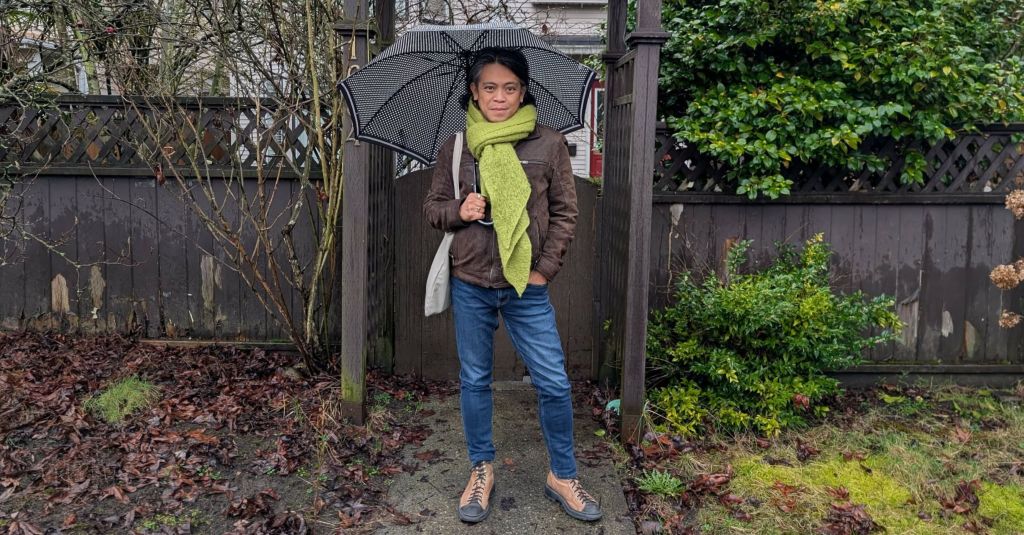
We worked remotely from Vancouver for a week, and I carried an umbrella everywhere.
Not because it was always raining — but because it might.
The sky revised itself daily. Sun in the morning. Grey by noon. Wind that arrived without warning. I stopped trying to predict it. I simply adjusted.
There is something honest about a city that refuses consistency.
What I did not expect was how the ocean would feel.
I grew up in Calauag, in Quezon Province — close enough to the Pacific that salt settled invisibly on skin. The shoreline there was not scenic; it was working water. Wooden fishing boats. Nets drying in uneven lines. The air thick with brine and diesel and heat. During typhoon season, the sea did not offer metaphor. It offered interruption.
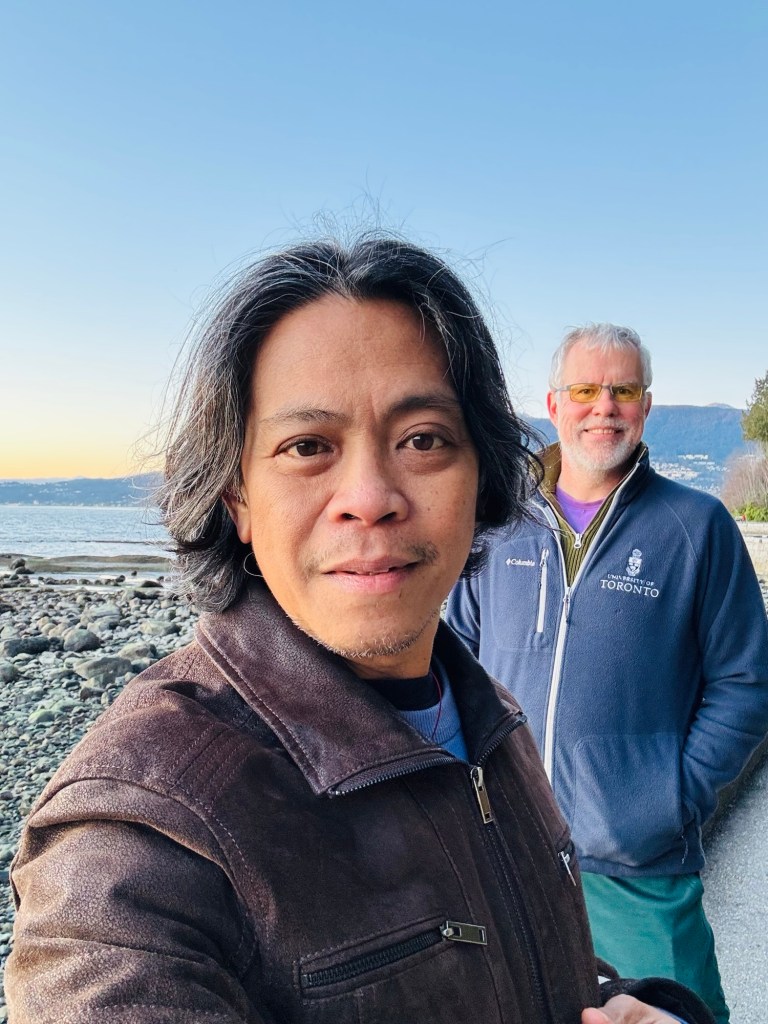
In Vancouver, the Pacific is steel-blue and edged by mountains. The air feels cooler, cleaner, almost restrained. I stood along the seawall and found myself asking a question I could not quite answer:
Is this the same ocean?
Perhaps in name. But oceans do not move in straight lines of sentiment. Currents turn. Water evaporates. It falls somewhere else as rain. It returns altered.
And yet something in my body recognized it.
Maybe migration does not sever the sea; it only changes which shore we stand on.
That thought stayed with me as the week unfolded — as I answered emails from cafés, revised drafts near open windows, listened to gulls circle above glass towers.
But the city would not allow itself to remain landscape alone.
One afternoon in Gastown, someone stopped me and asked if I had time to talk about Gaza. On another day, I walked past protests downtown — voices lifted for Iran, banners raised, grief and defiance written in thick marker across cardboard. The sidewalks held urgency. The air held argument.
Vancouver is not only mountains and ocean and shifting skies. It is a place where other geographies arrive. Where distant headlines become present voices. Where strangers assume you might have something to say.
An artist’s place is not just where the mind writes, but where the world presses in.
And the world was pressing.
One evening, at a restaurant, I saw someone I recognized from Instagram. We had just followed each other — that quiet choreography of contemporary literary life. We share journals, contests, mutual anxieties about craft and recognition. She was across the room with a large group of friends. I was with mine.
I considered crossing the space.
I didn’t.
Not out of fear. Not out of indifference. The moment felt possible — and unnecessary. There is a kind of restraint that feels truer than performance. Not every room must be crossed to count as connection.
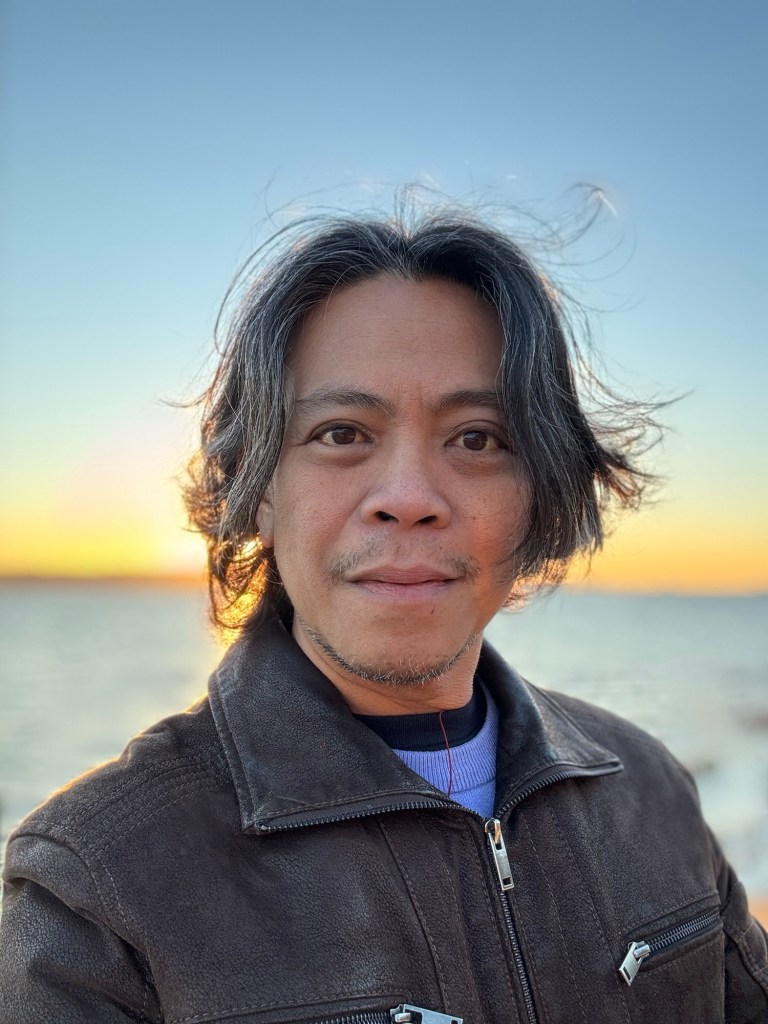
Earlier in the week, while we were walking along the seawall, news broke about the tragedy in Tumbler Ridge. A town far from the ocean. A rupture that could not be revised. I read the headlines on my phone while gulls circled overhead and the tide continued its slow breathing.
The Pacific did not still itself.
The city did not quiet.
Protests continued. Strangers kept asking questions. The sky changed its mind again.
Standing on one shore does not make the others disappear.
There are weeks when beauty and grief occupy the same air.
All week, I carried an umbrella.
I breathed in salt that felt both foreign and known. I listened without always knowing how to answer. I read. I walked. I worked.
The ocean moved. The headlines accumulated. Somewhere north, candles were being lit.
And I continue learning how to hold salt, headlines, and my own small voice in the same body.

 Renato Gandia