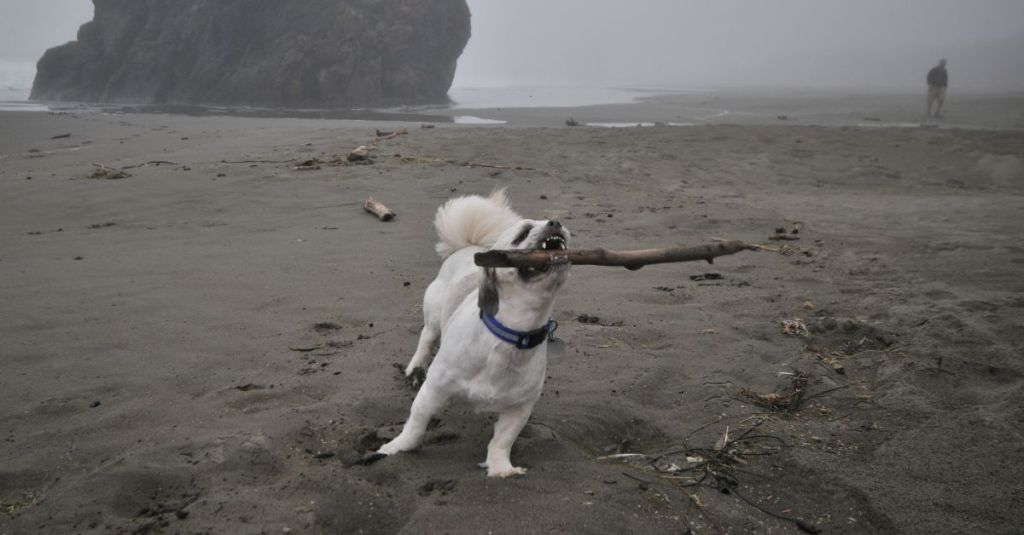
We took Marley for a walk on Tuesday evening. We didn’t know it would be his last.
He was wrapped in his blue blanket, his small body resting on my lap as Boyd and I took turns holding him. We went to Tom Campbell Hill—his favourite park—though he didn’t seem to know where he was this time. The climb that used to make him quiver with excitement no longer stirred him. In the past, he would stand up in the backseat the moment the car began to tilt upward, tail wagging, eyes bright, already anticipating the smell of open grass and everything that waited for him in that beautiful park atop a hill overlooking downtown Calgary.
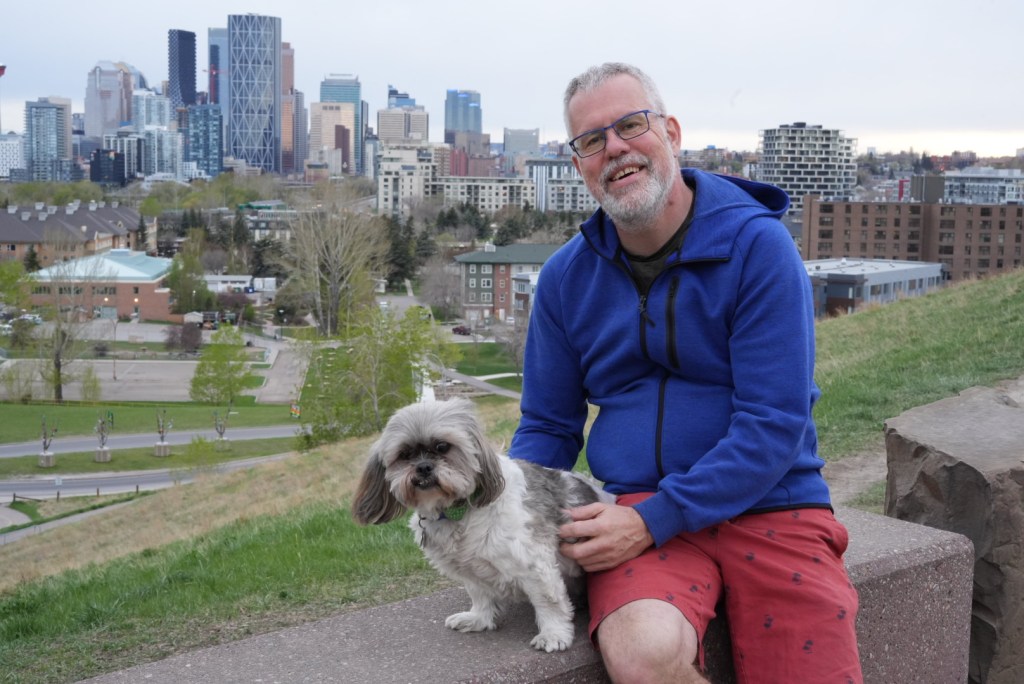
This time, he only blinked. His breathing was shallow, his eyes unfocused.
Boyd leaned close and whispered, “Do you know where you are, little boy?”
Marley didn’t answer. Maybe he couldn’t. Maybe he didn’t need to. Love, at the end, is not about recognition. It’s about remaining—about being there when presence itself begins to slip away.
The park was quiet that evening. The city below glowed with its usual indifference—lights flickering in the valley, towers standing like sentinels, unaware of the small act of devotion unfolding above them. We stood on the crest where Marley used to run freely, his fur a blur against the tall grass, his joy uncontainable. Now, only the wind moved, soft against his blanket.
We lingered there as the first hint of twilight appeared, saying almost nothing. The world seemed to narrow to the three of us—one life nearing its end, two hearts trying to memorize the sound of its breathing. It felt less like a walk than a prayer, a pilgrimage to the place where love had once run wild.
When we got home, the house fell silent. Marley had his dinner and took his medication. We took it as a small mercy, a flicker of hope that he might rally—that his appetite meant his body still wanted to stay. For a brief moment, we believed he would bounce back, as he had so many times before.
But as the night went on, it became clear that his body was surrendering. We had watched him lose, one by one, the simple abilities that once defined his independence—to stand, to walk, to relieve himself without help. And so we made the best, and hardest, decision love can demand: to let him go with dignity, while he was still held in our arms.
About half an hour after our final visit to the vet clinic, Boyd and I went back to Tom Campbell Hill. It was a beautiful, sunny fall afternoon—the kind of day that makes the city gleam as if unaware of what has just been lost. We couldn’t bear the quiet at home, so we returned to the place that had always been his joy. The grass was dry and golden under the light, rustling softly in the breeze. We took our time walking, looping the path three times until we grew tired. Each round felt like a conversation with the air—a way of tracing our love through the place that had once held his delight. The hill was alive with warmth and wind, and for a moment, it felt as though the earth itself remembered him.
On the drive home, If You Leave Me Now played in my head. Not from the radio—it surfaced on its own, uninvited but perfect. That song has always been a plea, but tonight it felt like an understanding: love’s impossibility of letting go. “Ooh, baby please don’t go…” It wasn’t desperation, but devotion—the ache of wanting love to remain, even when it must move beyond us.
Marley had been with us through everything—our moves, our illnesses, our laughter, our arguments and reconciliations. He was the quiet witness to our shared life, the steady pulse at the edges of our days. Losing him feels like losing rhythm itself.
Gabriel Marcel once wrote, “To love someone is to say: you shall not die.” I hold onto that thought now, not as denial, but as faith. Perhaps Marley hasn’t vanished—perhaps he’s simply become part of the wind that brushed against us on the hill, part of the stillness that lingers after the door closes, part of the breath that catches when we call his name in our heads.
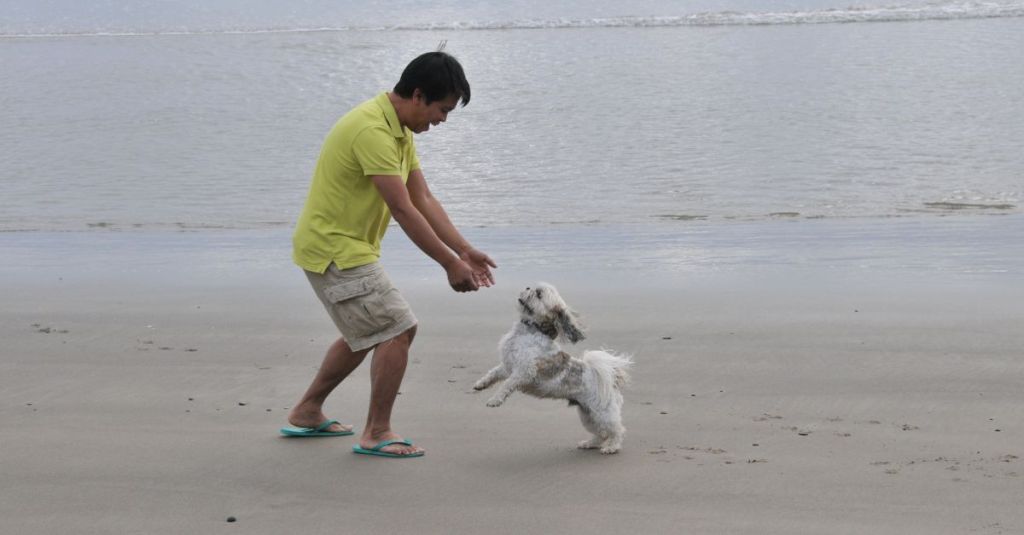
Later that day, Boyd and I sat together looking through old photos and videos of Marley—young, energetic, impossibly full of life. There he was, running across the hill, ears flapping, eyes bright with mischief; there he was, tilting his head as if he understood every word we said. His personality filled every frame—magnetic, joyful, certain of his place in our world. Watching him again was both comfort and ache: grief transforming, moment by moment, into remembrance.
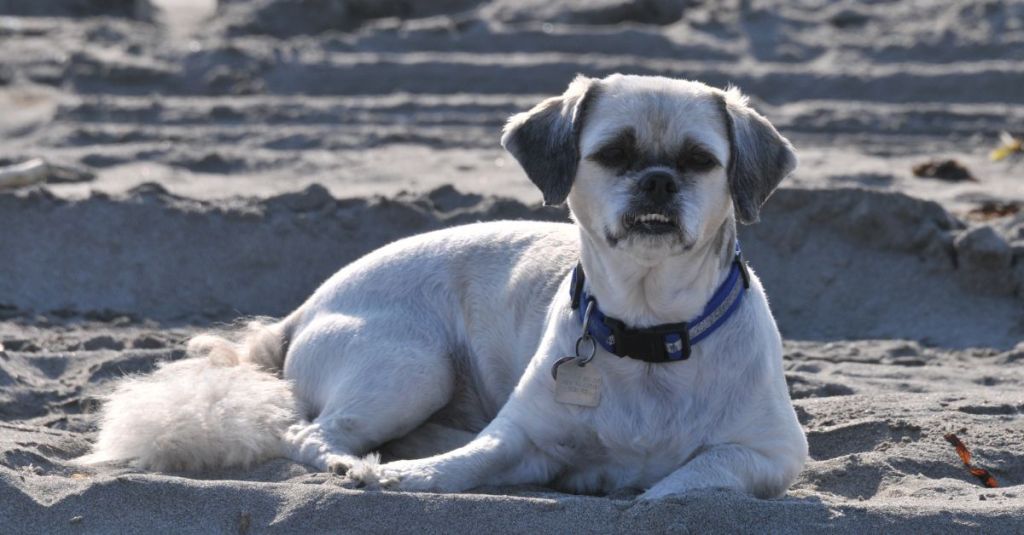
If there’s a heaven for dogs, I hope it looks like Tom Campbell Hill at sunset—golden light over the valley, the scent of grass, the sound of wings above. I hope he’s there, running again, sure of where he is.
Goodbye, our little boy.
You were love made small enough to hold, and vast enough to stay.
Written just hours after we said goodbye to Marley (2008–2025), our beloved Shih Tzu mix.


