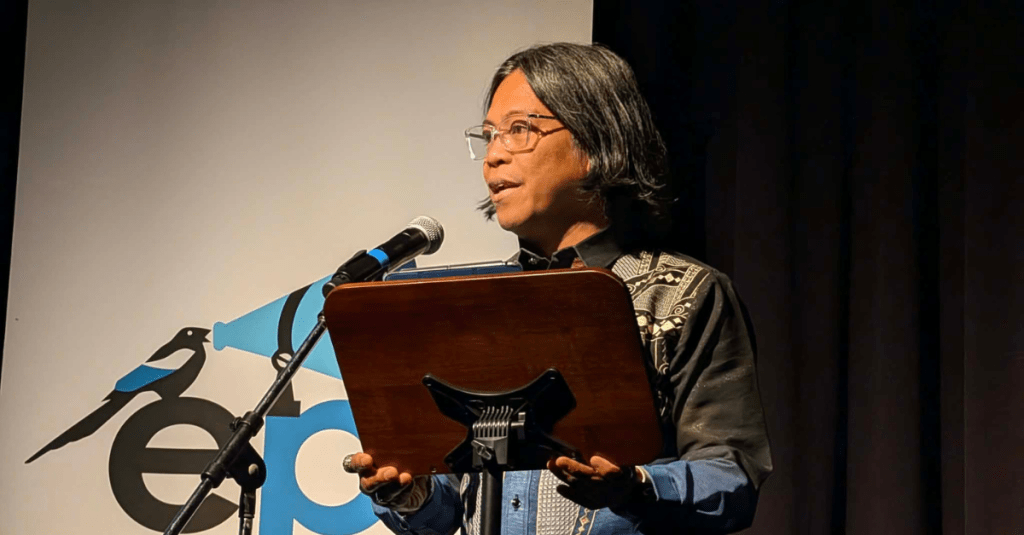
We barely made it to Edmonton.
There are drives that feel routine—measured in kilometres, coffee stops, the quiet rhythm of highway lines slipping past. And then there are drives like this one, where the road refuses to be taken for granted.
It wasn’t the fog that made it dangerous, though there was fog—low and lingering, softening the edges of everything. It was the highway itself.
About sixty kilometres stretch north of Calgary, the road turned to slush. Thick, heavy, uneven. Tires didn’t quite grip the way they should. Each lane felt uncertain, as if it might give way at any moment. Around us, drivers slowed—not always in sync, not always predictably—each car making its own quiet reading of the road.
And then the trucks.
The big haulers came through with force, their wheels cutting through the melting snow, sending up waves of dirty spray that hit the windshield all at once. For a few seconds at a time, visibility disappeared completely—not gradually, like fog, but suddenly, violently. You wait for the wipers to catch up, for the road to reappear.
You grip the wheel differently in those moments. You lean forward, as if your body could steady the car. Every passing vehicle feels like a question: how will they move? where will they land?
We kept going.
By the time we reached Edmonton, the city felt less like a destination and more like something that had slowly emerged from that same fog. We had arrived safely, and for a moment, that was enough.
Until I realized something was missing.
The barong wasn’t forgotten in the usual way—not crumpled at the bottom of a bag, not misplaced among other things. It had been carefully set aside on a hanger, zipped into its own carrying case, ready to go. Ready, but not brought.
Left behind in Calgary.
There is a particular frustration in that kind of mistake. Not carelessness, exactly, but a lapse in attention—a moment where something clear becomes, suddenly, obscured.
I thought briefly about turning back. But the memory of the highway—its narrowed vision, its quiet uncertainty—made the idea feel almost impossible.
After a few choice words—muttered mostly at myself—and steadied by my husband’s calm, level-headed presence, I adapted. I found a shirt at a shop. Something simple, something that could pass. It wasn’t a barong. It wasn’t even close. But it was enough, I told myself.
Still, something felt missing.
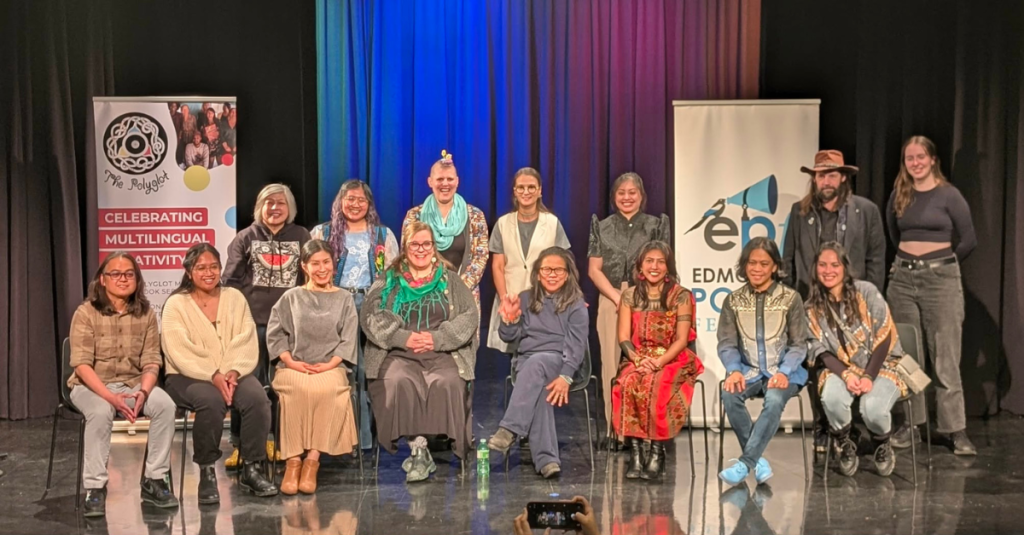
When I arrived at the venue for the launch of Hilom, I saw her almost immediately.
Mila was walking towards me as I stood at the entrance of the Stanley Milner Library, a barong draped over a hanger, covered in clear plastic.
For a second, I just looked at it.
It was such a small, ordinary detail. And yet it held me there—the quiet coincidence of it. My own barong, miles away, hanging in its case. And here, in front of me, another one, carried carefully into the theatre.
We greeted each other. She is a writer I met a couple of years ago through Magdaragat anthology, but also someone deeply rooted in Edmonton’s Filipino community—one of those people who instinctively understands how to hold others within it.
I mentioned what had happened—almost in passing, the way you share a small inconvenience, not expecting anything to come of it.
She offered me her barong.
I laughed at first. It felt too much, too generous, too immediate. You don’t take something like that lightly—something chosen, something meant for a particular evening, a particular presence.
I hesitated. I told her she didn’t have to.
She insisted. Simply, without ceremony. There was nothing to negotiate.
I eventually accepted her generous offer.
I wore her barong, which somehow fit me perfectly.
And in that simple exchange, something came into focus.
We speak often about bayanihan—as value, as identity, as something we inherit and carry with us. But like anything often repeated, it can begin to blur. To lose its outline.
Last night, it didn’t.
It was a barong passed from one person to another.
A quiet recognition of need, met without hesitation.
An offering that asked for nothing in return.
In the months following the Lapu-Lapu Day Festival tragedy, there have been many conversations about grief and about how communities recover from rupture. But more than conversation, there has been gathering—people coming together, not to resolve the grief, but to hold it collectively.
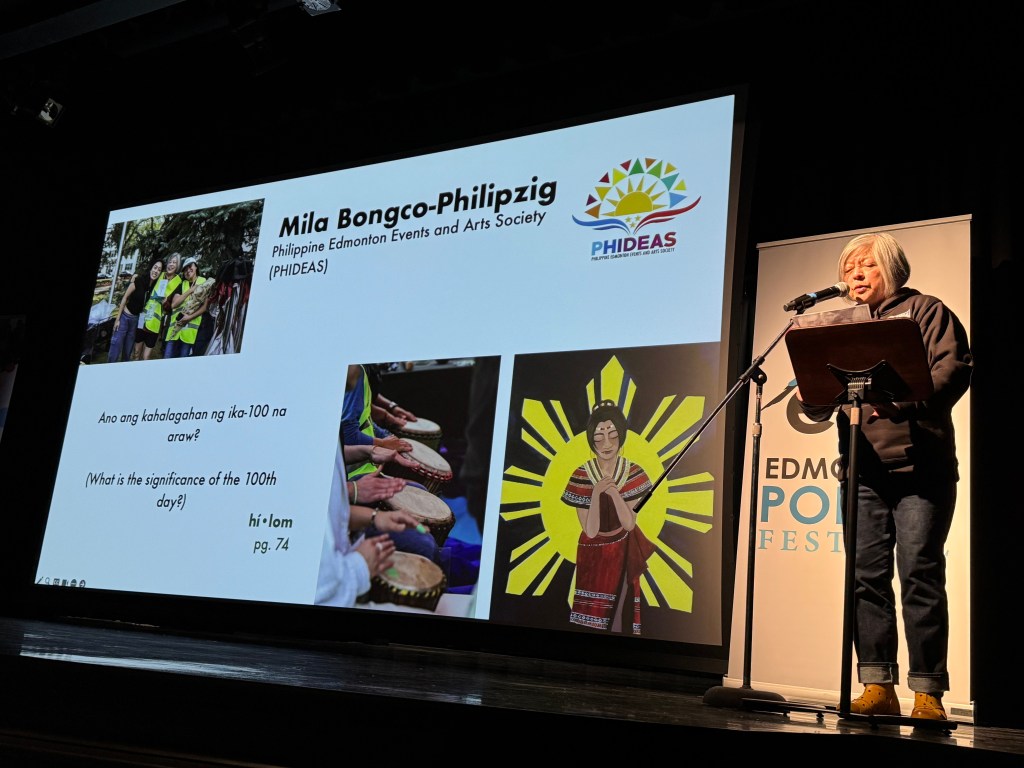
Hilom, this new edition of Polyglot Magazine, was born from that impulse. Produced in conjunction with Philippine Edmonton Events and Arts Society (PHIDEAS)—an organization Mila is deeply part of—it is less a publication than a gesture toward healing. A way of saying: we are still here, and we are still with one another.
What does it mean to heal? What does it look like, beyond statements and memorials?
I don’t think healing arrives all at once.
I think it comes the way the road did yesterday—slowly, partially, revealed only a few steps ahead. Never the whole distance. Just enough to keep going.
Sometimes, it looks like this.
A difficult drive through slush, spray, and fog.
An honest admission of a small mistake.
A woman standing at the entrance of a room, holding exactly what someone else has left behind.
Resilience is often spoken of as something individual—a matter of endurance, of pushing through. But nights like last night remind me that resilience is also shared. It moves between us, passed hand to hand, not always named.
I wore Mila’s barong last night, but what stayed with me was not the fabric, or even the gesture itself.
It was the clarity.
That we do not move through these spaces alone.
That even our small lacks can be met with unexpected generosity.
We made it to Edmonton.
And in the end, it wasn’t the fog that stayed with me.
It was the quiet but surprising ways we find each other in it.
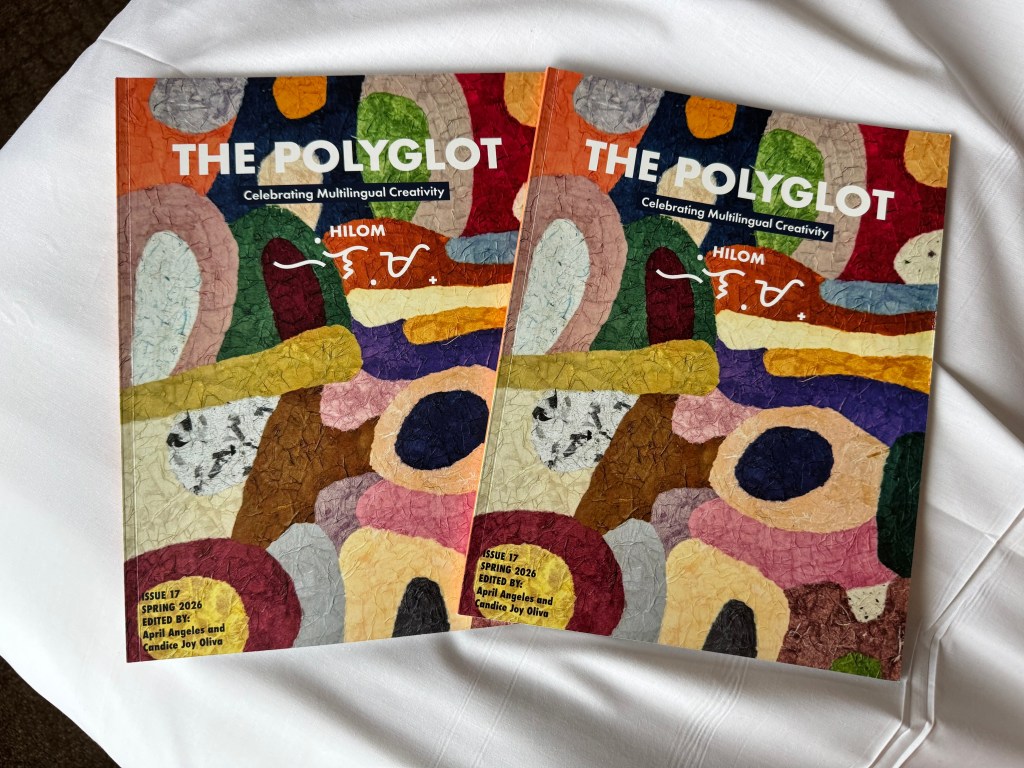
Hilom, edited by Candice Joy Oliva and April Angeles, the latest edition of Polyglot Magazine—born from community, care, and the work of healing—is available through the magazine’s website.

 Renato Gandia