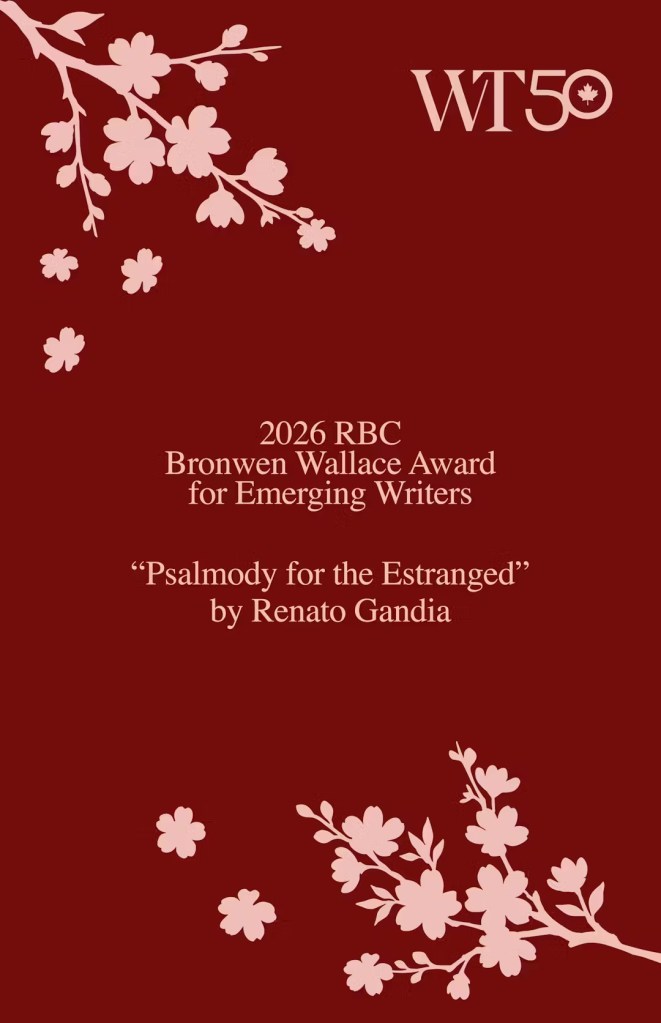
When the ebook of finalists for the 2026 RBC Bronwen Wallace Award — one of Canada’s most celebrated prizes for emerging writers — was published, I found myself staring at the title of my portfolio on the Writers’ Trust website as if someone else had written it: Psalmody for the Estranged.
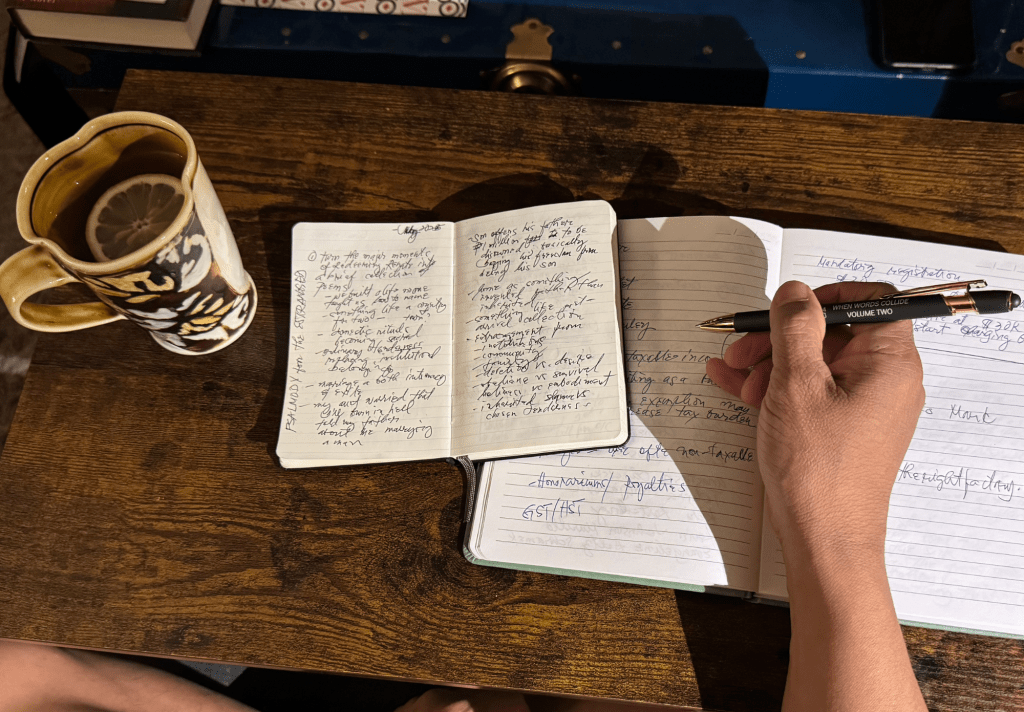
Not because the title felt unfamiliar, but because it suddenly existed in public. What had once belonged only to my notebook, laptop, my Notes app, and the quiet hours after work now sat beside my photograph and biography, available for strangers to read.
For years, I thought poetry required revelation in the dramatic sense. I thought poems had to arrive loudly, through confession, rupture, transformation. But assembling this portfolio taught me something else. The poems that stayed with me, the poems that shaped Psalmody for the Estranged, moved differently. They whispered. They waited. They lingered beside ordinary moments until those moments revealed the emotional weight they had been carrying all along.
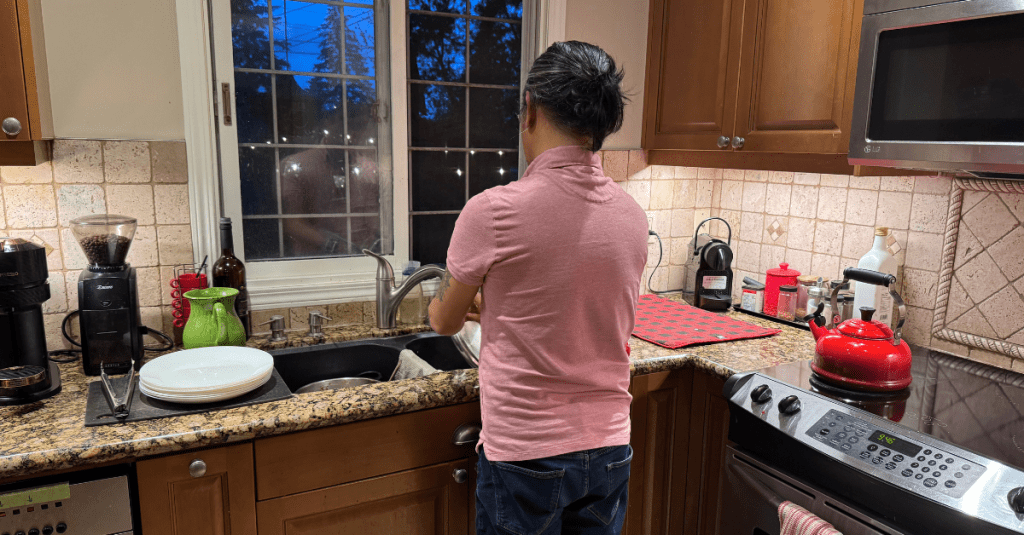
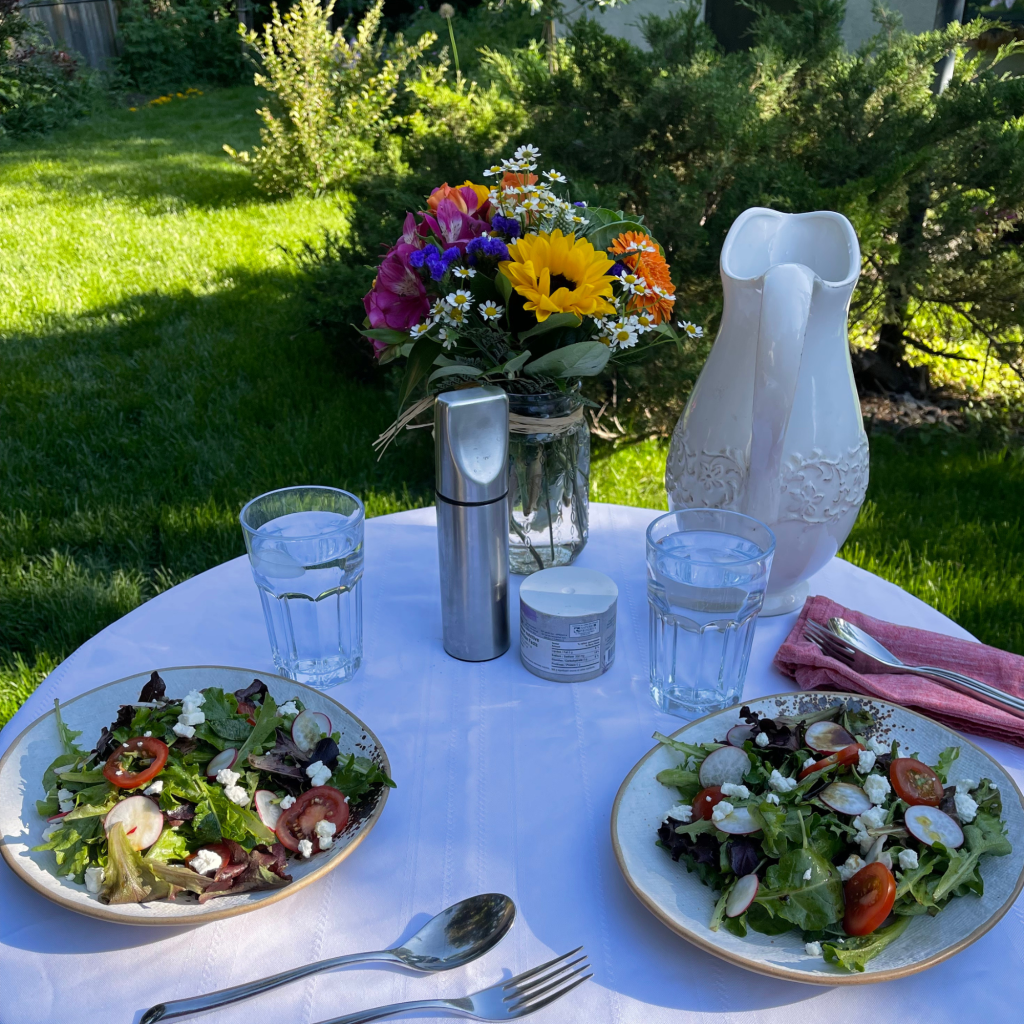
A husband grilling pork loin on a Calgary deck while I prepare sinigang inside. A Filipino cashier hesitating when I mention my husband. Steam rising from a rice pot. A citizenship oath spoken with a tongue still searching for the right vowel of belonging. A kitchen table becoming, unexpectedly, an altar.
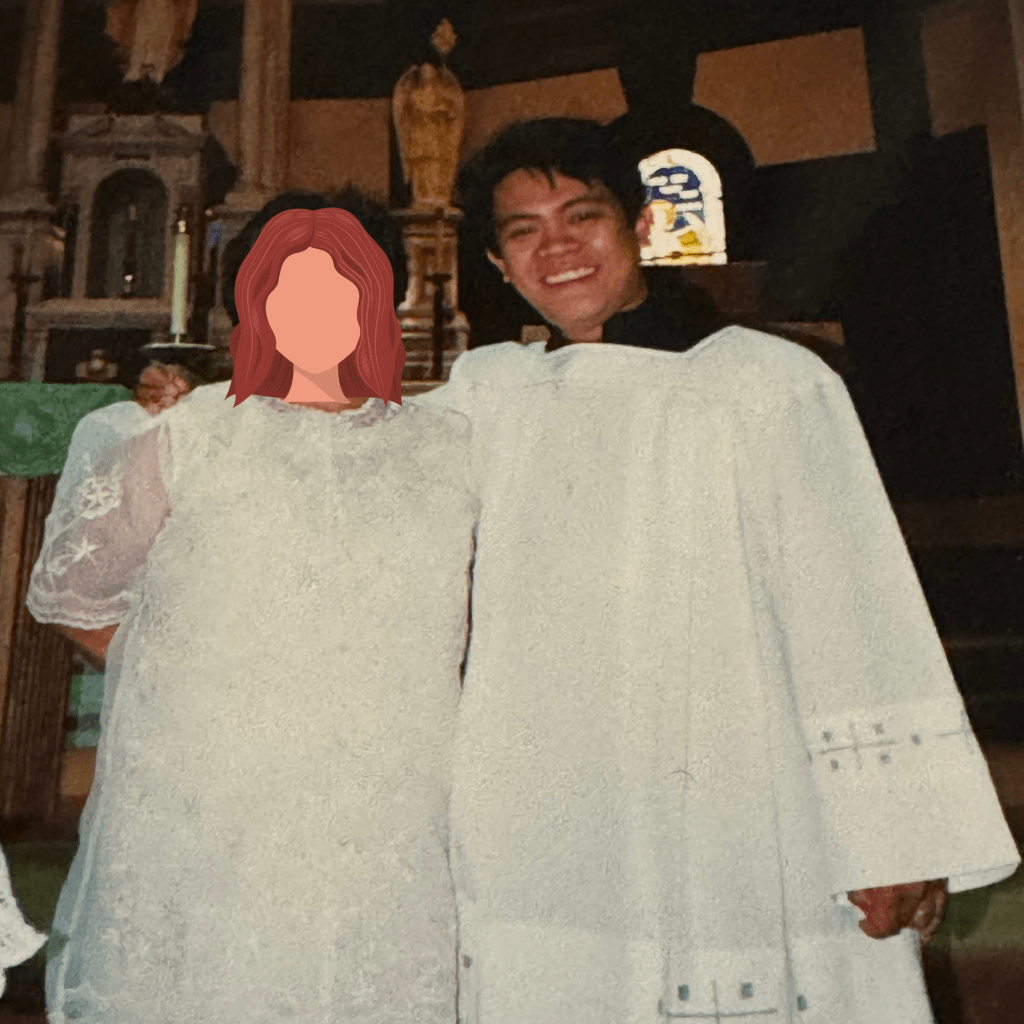
The word psalmody comes from communal singing — the singing of psalms. I was drawn to it because so many of these poems emerged from the language of Catholic ritual and prayer. I grew up believing holiness lived in cathedrals, in incense, in Latin, in perfectly folded linens and memorized responses. I once believed the sacred required obedience.
But estrangement became part of my life long before I had language for it.
Estrangement from the Church. Estrangement from the version of masculinity I inherited. Estrangement from the Philippines after immigrating to Canada. Estrangement even within communities I thought would immediately feel like home. Too gay for some spaces. Too Filipino for others. Not Filipino enough elsewhere. Not quite Canadian enough despite the citizenship certificate folded carefully into a drawer.
The poems began there, not in certainty, but in the in-between.
Writing this portfolio, I kept being pulled back toward domestic life, which I hadn’t expected. Again and again, the poems abandoned grand gestures and returned to kitchens, grocery stores, shared meals, touch, weather, dishes drying by the sink. The sacred, the poems seemed to insist, was not elsewhere. It was already here.
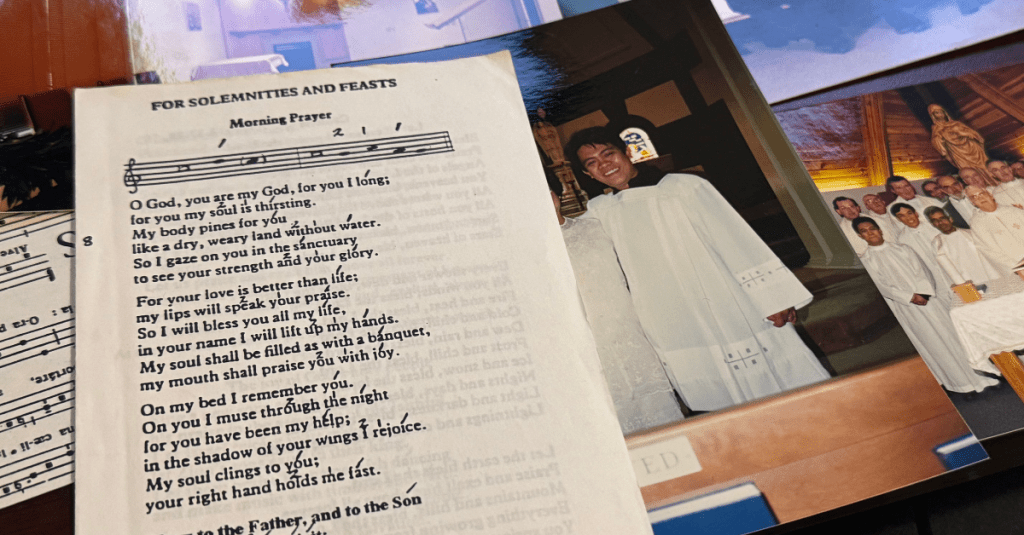
In “Eucharist for the Estranged,” the ritual of Communion shifts from the church altar to the dinner table. Wine is poured. Bread is shared. Garlic and thawing snow replace incense. A husband’s touch becomes sacramental.
I did not set out consciously to write against religion. If anything, I think I was trying to salvage something from it. Or perhaps relocate it.
I no longer know what I believe about God in the doctrinal sense. But I do know this: there is holiness in tenderness. There is holiness in feeding another person. There is holiness in building a queer domestic life in a world that still sometimes treats it as provisional or strange.
For a long time, I thought poetry had to explain pain. These poems taught me it could also consecrate survival.
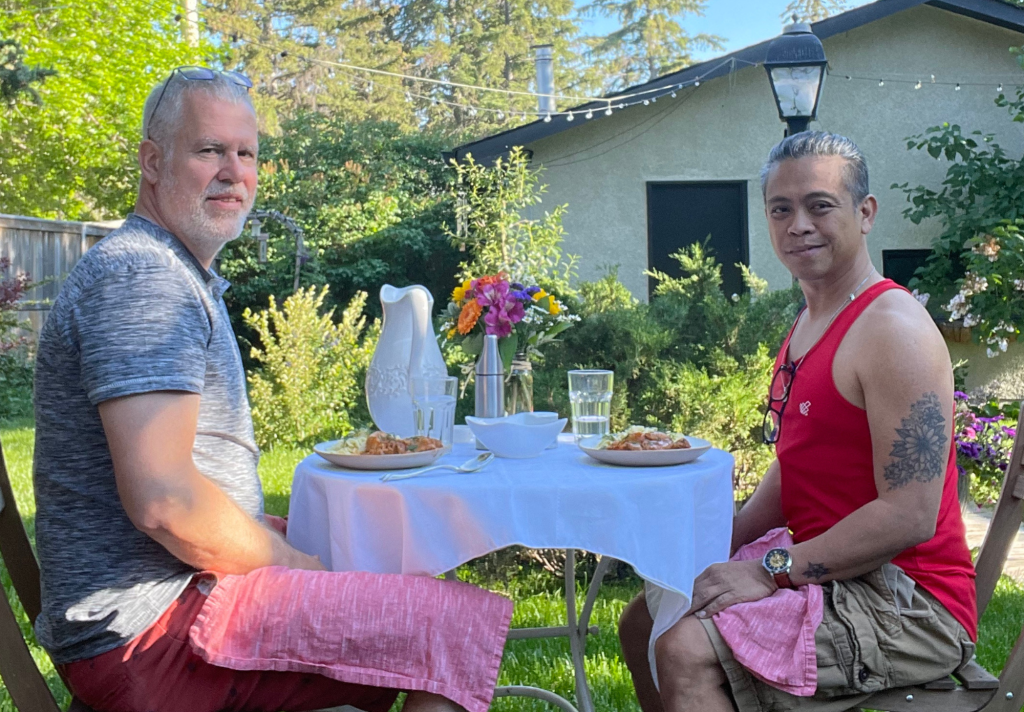
The husband poems especially felt emotionally risky to write. Not because loving my husband is shameful — it is the most ordinary and sustaining part of my life — but because queer domesticity is still rarely granted the same quietness heterosexual love receives automatically.
There are many narratives available to queer writers: trauma, secrecy, rupture, spectacle. Those truths matter. But I also wanted to write about grocery lists. Mortgage payments. Dogs circling couches. Watching the evening news together while one person silently reaches for the other’s knee.
I wanted to write toward the quieter miracle of endurance.
Several poems in the portfolio take place in explicitly Filipino spaces: the grocery store, the family kitchen, the remittance counter. In those poems, I found myself returning repeatedly to the feeling of partial belonging.
At the Filipino store, a cashier smiles differently after learning the person waiting outside is my husband. A raffle ticket promises “a ticket home,” and suddenly home itself becomes unstable, shifting meanings sentence by sentence.
In “Remittance,” money transfers become emotional transactions: guilt converted into currency, absence measured in decimals and receipts.
Immigration complicates nostalgia because the country you miss continues changing without you. Meanwhile, the country you arrive in asks you to perform certainty and gratitude while still remaining faintly unconvinced by your presence.
The citizenship ceremony poem emerged directly from that tension. I remember raising my hand during the oath and feeling both deeply moved and strangely ghostlike at the same time. Proud. Grateful. Unsettled. As though citizenship and belonging were related but fundamentally different things.
Language also became central to the portfolio. I left Tagalog words untranslated throughout the poems: Nanay, Tatay, Kuya, Patawarin mo ako.
I did this partly because some emotional textures resist English. But also because estrangement itself became part of the reading experience I wanted to preserve. To live between languages is to constantly inhabit partial understanding. Some readers may not know every word, but that uncertainty mirrors the emotional condition of many immigrants: understanding almost everything while never fully relaxing into fluency, culture, or belonging.
Around the same time I was assembling this portfolio, I was also revisiting my memoir, Unpriesting — an account of thirteen years in Catholic seminary formation, the decision not to be ordained, and the slow work of becoming someone new on the other side. Returning to that manuscript changed the poems in ways I didn’t anticipate. The memoir concerns major events — vocation, migration, sexuality, loss — but poetry kept drawing me toward what those events left behind.
The poems were less interested in what happened than in what settled after.
A smell. A silence. A prayer half-remembered. A husband whispering your name in bed. A kitchen filled with steam.
Poetry gave me permission not to resolve those moments into conclusions.
When I look at the portfolio now, I realize many of the poems are asking the same question: how do we build lives inside forms that once excluded us?
How does a gay Filipino immigrant remake prayer after estrangement from the Church? How does love survive translation? How do you belong to communities that sometimes hesitate before fully claiming you? How do you carry devotion forward after faith changes shape?
I do not think the portfolio answers those questions completely. But maybe poems aren’t built for answers. Maybe they’re built for sitting inside the question long enough that it starts to sound like something.
That may be what this portfolio finally became — a small song for living between worlds, a way of blessing the life I once thought I had to refuse.
Outside my window tonight, Calgary is still cold despite the late spring. My husband is in his home office programming. Soon the house will smell like garlic and rice again. Somewhere in another country, my father is likely already asleep.
And between those distances — between languages, countries, selves — the poems continue quietly singing.


