
This week, I found myself thinking about three seemingly unrelated things: a papal encyclical on artificial intelligence, a labour rally in Alberta, and a flight to Toronto for a literary award ceremony.
On the surface, they have nothing to do with one another. One belongs to the Vatican. One belongs to politics. One belongs to literature.
Yet all three seem to circle the same question: What happens when human beings stop seeing one another as human beings?
I have spent much of my adult life moving between institutions. The Church. Newsrooms. Government agencies. Labour organizations. Each one, in its own way, is tasked with serving people. Each one also risks reducing people to something smaller than themselves.
A parishioner becomes a number in a pew. A citizen becomes a voter. A worker becomes a vacancy rate. A patient becomes a wait time. A writer becomes a submission.
The language changes, but the temptation remains the same. The larger the system, the easier it becomes to forget the individual lives moving through it.
That is partly what caught my attention when Pope Leo XIV released his first encyclical on artificial intelligence. Much of the public discussion around AI focuses on what it can do. How quickly it can write. How efficiently it can process information. How many jobs it might replace. How much money it might save.
The Pope’s concern appears to be something deeper. Not whether machines can think, but whether human beings will continue to value the things that make us human when efficiency becomes the highest virtue.
It is a question worth asking — and one I find myself unable to answer cleanly.
We live in an age obsessed with optimization. Faster responses. Faster delivery. Faster production. Faster decisions. More and more, the value of something seems tied to how quickly it can be produced and consumed.
But some things resist acceleration. Grief resists it. So does love — the kind that requires showing up imperfectly, repeatedly, without guarantee of return. A poem can take months to write and five minutes to read, and the months are not wasted time. They are the work. No algorithm can shorten what it takes to become fully human, and I’m not sure we’ve reckoned seriously with what it means that we keep trying to find one that can.
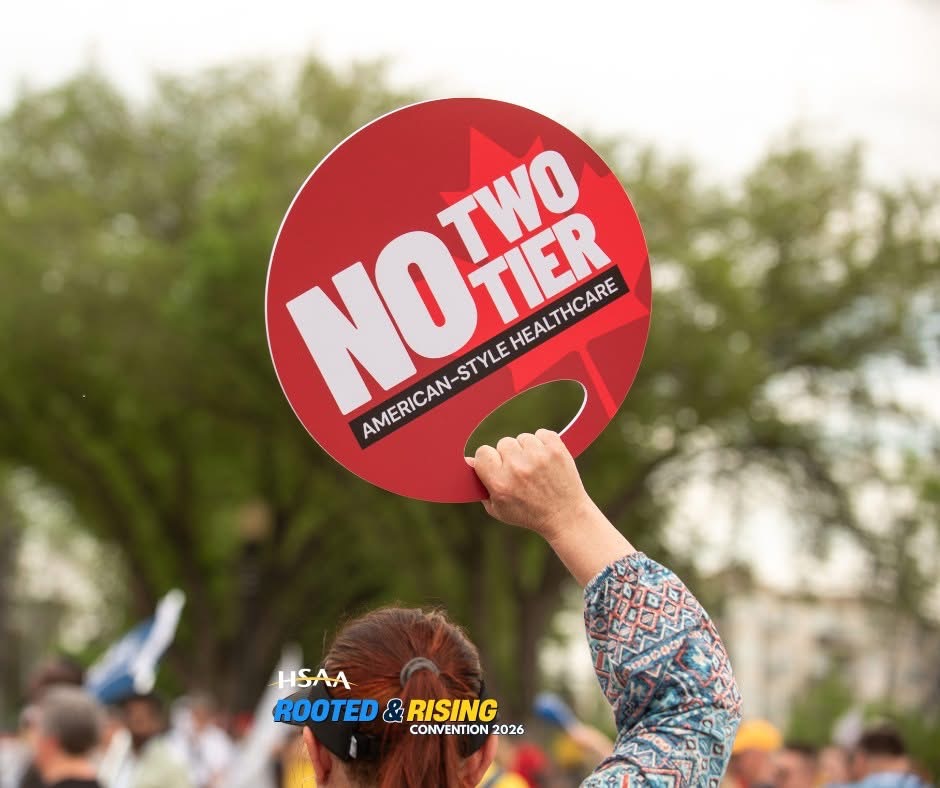
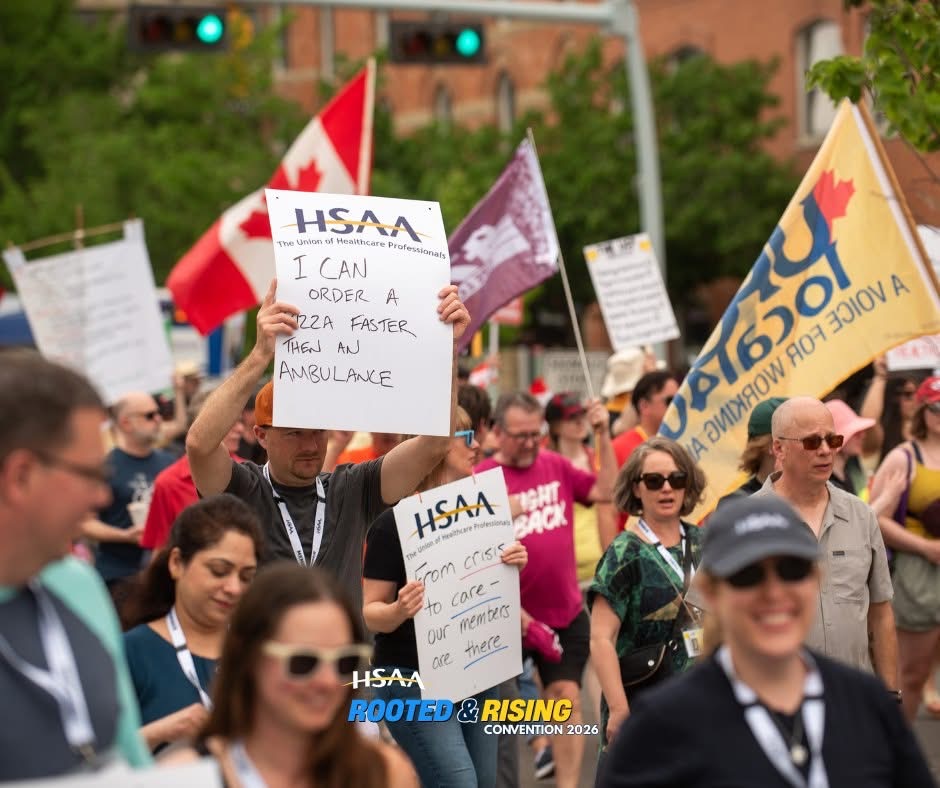
Images from Health Sciences Association of Alberta’s social media post.
Meanwhile, back home in Alberta, thousands of people gathered at Fight Back Now rallies across the province yesterday.
Whatever one’s politics, rallies emerge from a similar impulse. People want to be heard. They want someone to acknowledge that their experiences matter. They want to know they are more than statistics in a report or collateral damage in a policy announcement.
Beneath every debate about healthcare, education, affordability, or public services lies a profoundly human question: Who counts? Not whether people are productive, or whether they vote the right way — but whether they are seen at all.
The answers shape more than policy. They shape the kind of society we become.
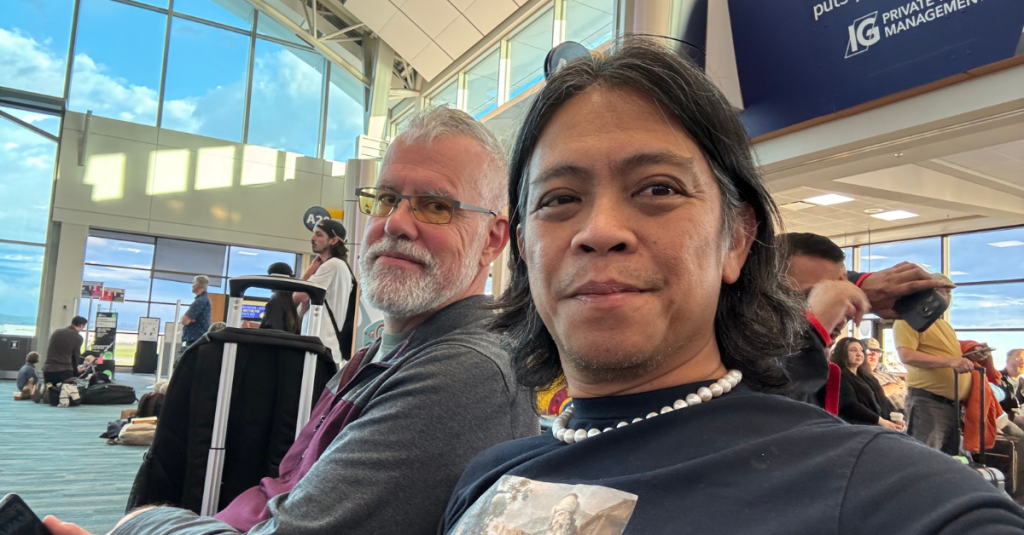
And then there is Toronto.
I’m aboard a plane to attend the RBC Bronwen Wallace Award ceremony on Monday. Like every finalist, I have no idea what will happen when the winner’s name is announced. For a few weeks now, I’ve been wondering what to wear — and honestly, that uncertainty feels more manageable than the other kind.
What strikes me most is not the possibility of winning. It is the reason the award exists in the first place.
Somewhere, a group of judges sat down and read hundreds of pages of poetry, fiction, and creative nonfiction. They spent hours with the words of strangers. They paid attention. In a culture increasingly dominated by speed, there is something quietly radical about that. Attention is not a small thing. It might be the thing.
To read deeply is an act of attention. To write honestly is an act of attention. To listen to another person’s story is an act of attention. Literature asks us to inhabit lives that are not our own. It teaches us that every person contains an interior world larger and more complicated than we first imagine.
That may be why I find myself thinking about these three events together. The encyclical. The rallies. The ceremony. Each one, in its own way, is asking whether we still have the patience for one another.
Perhaps what frightens many people about this moment is not artificial intelligence itself. It is the possibility that we will begin to imitate machines. That we will become less patient with complexity, less tolerant of ambiguity, less willing to sit with experiences that cannot be reduced to data points or talking points.
The irony is that the very qualities that make us human are often the least efficient ones. Compassion rarely arrives on schedule. Listening requires setting aside what you planned to say next. A story asks you to stay with someone else’s confusion long enough to understand it. None of this is efficient, and none of it can be automated without becoming something else entirely.
Yet these are the things that give our lives meaning.
As I sit on the plane to Toronto, I keep returning to a simple thought. While politicians debate, while institutions reform themselves, while technology races forward at astonishing speed, a room full of people will gather to celebrate poems, stories, and essays. Words. Not because words solve every problem. But because words help us recognize one another.
And perhaps that is what remains most necessary. To pay attention. To listen carefully. To refuse the temptation to reduce people to categories, metrics, outputs, or outcomes. To remember that behind every policy, every workplace, every parish, every protest, every poem, there is a human being hoping to be seen.
In an age increasingly defined by what machines can do, that may be the most human thing left for us to do.

 Renato Gandia