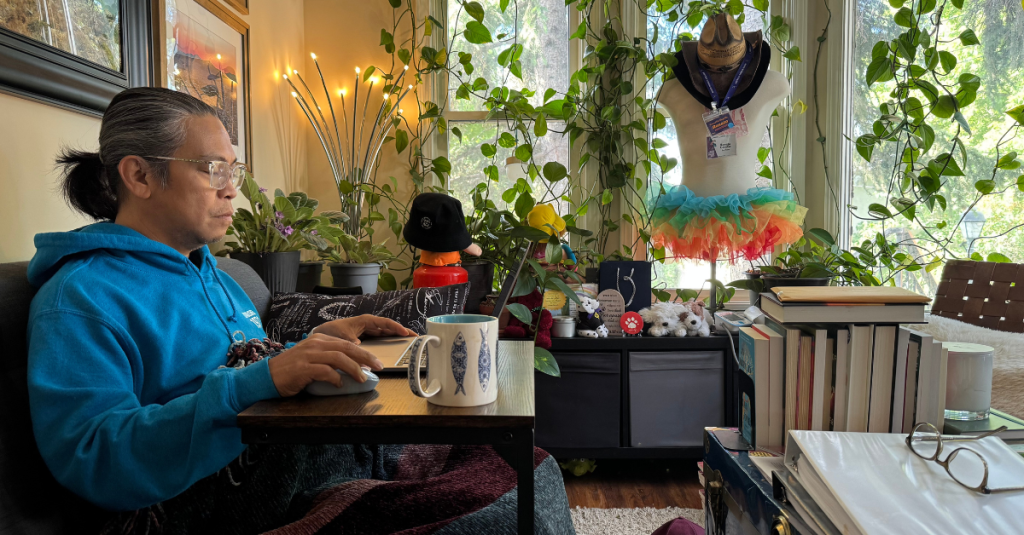
On this Father’s Day morning, I am sitting in the sunroom watching birds gather at the feeder hanging from our porch.
They arrive in brief bursts of motion. A sparrow lands, pecks at a seed, and disappears. Another takes its place. The feeder sways gently in the breeze. Somewhere beyond the window, the city is waking up. Boyd is still asleep. The coffee beside me has grown lukewarm.
And, as often happens on days like this, I find myself thinking about my parents.
This is my first Father’s Day since my mother died.
The grief arrives unexpectedly. Not always as sadness. Sometimes as memory. Sometimes as gratitude. Sometimes as a question that has no answer.
This morning, I am thinking about my father.
Or perhaps more accurately, I am thinking about the stories my mother carried about him.
Father’s Day has never been a simple occasion for me.
Like many people, I carry both gratitude and grief when I think about my father. The gratitude comes easily enough. My father worked hard to provide for our family. The roof over our heads, the food on our table, the education that opened doors for me, and eventually the life I built in Canada all bear the imprint of his labour.
The grief is more difficult to explain.
Part of it is because my relationship with my father has never been easy. I remain, in some ways, a disappointment to him. I am a gay man, and while much has changed in the world around us, that truth remains a source of distance between us. There are conversations we have never had, understandings we have never reached, and versions of each other we may never fully know.
Yet as Father’s Day arrives this year, I find myself thinking less about the distance between us and more about my mother.
Many of my fondest memories of my father are not mine.
They are memories my mother carried.
When I was three or four years old, I became gravely ill. I have no memory of the sickness itself. What I know comes from my mother. She told me that my father was so desperate to get me medical care that he took copra from his own father’s stores so he could sell it and raise enough money to bring me to a doctor. Whether he saw it as stealing or borrowing, I will never know. What remains with me is the image of a young father frightened enough to risk his father’s anger in order to save his son.
Years later, when I contracted typhoid fever, I spent ten days in the hospital. I remember the illness. I remember the hospital bed and the endless waiting. What I do not remember is my father’s fear. That memory belongs to my mother. She told me how worried he was, how he lingered by my bedside, how he carried the possibility of losing me long before I understood what was happening.
Then there were the college years. Money was often tight. As the end of the month approached and tuition fees came due, my mother would tell me about my father’s worries. I saw only the school fees being paid. She saw the calculations behind them, the sleepless nights, the determination to make sure his children received an education he himself had not been able to pursue.
These stories became my inheritance.
My mother was often the interpreter of my father’s love.
When I struggled to understand him, she offered context. When I focused on what was absent, she reminded me of what was present. Through her stories, she taught me that love is not always spoken in the language we wish to hear. Sometimes it appears as sacrifice. Sometimes it arrives as worry. Sometimes it takes the form of a father carrying burdens his children do not yet know he is carrying.
Now that she is gone, I realize how much of that work she had been doing all along.
This is my first Father’s Day without her.
And I find myself reaching for the stories she used to tell.
I remember how she spoke about my father’s perseverance. How she admired his work ethic. How she could recount moments from their shared life with a generosity that softened even difficult memories. She possessed a remarkable ability to hold complexity without bitterness.
Perhaps that is one of the greatest gifts she left me.
As I have grown older, I have learned that gratitude and disappointment can coexist. I can be thankful for what my father gave our family while mourning the closeness we never quite achieved. I can honour his sacrifices while acknowledging the hurt that remains. I can appreciate the life he helped make possible while knowing that part of who I am remains difficult for him to accept.
Both things can be true.
The older I get, the less interested I am in choosing between competing versions of the past. Life is rarely that tidy. Most relationships are composed of contradictions. We carry affection alongside resentment, admiration alongside frustration, longing alongside acceptance.
This Father’s Day, I find myself holding those contradictions with a little more tenderness.
I am grateful for my father. I am grateful for the life his sacrifices made possible. I am grateful for the values of perseverance and hard work that he modelled.
And I am grateful for my mother, who taught me how to see those things.
The gentlest stories I have about my father were stories she carried for both of us.
Now they live with me.
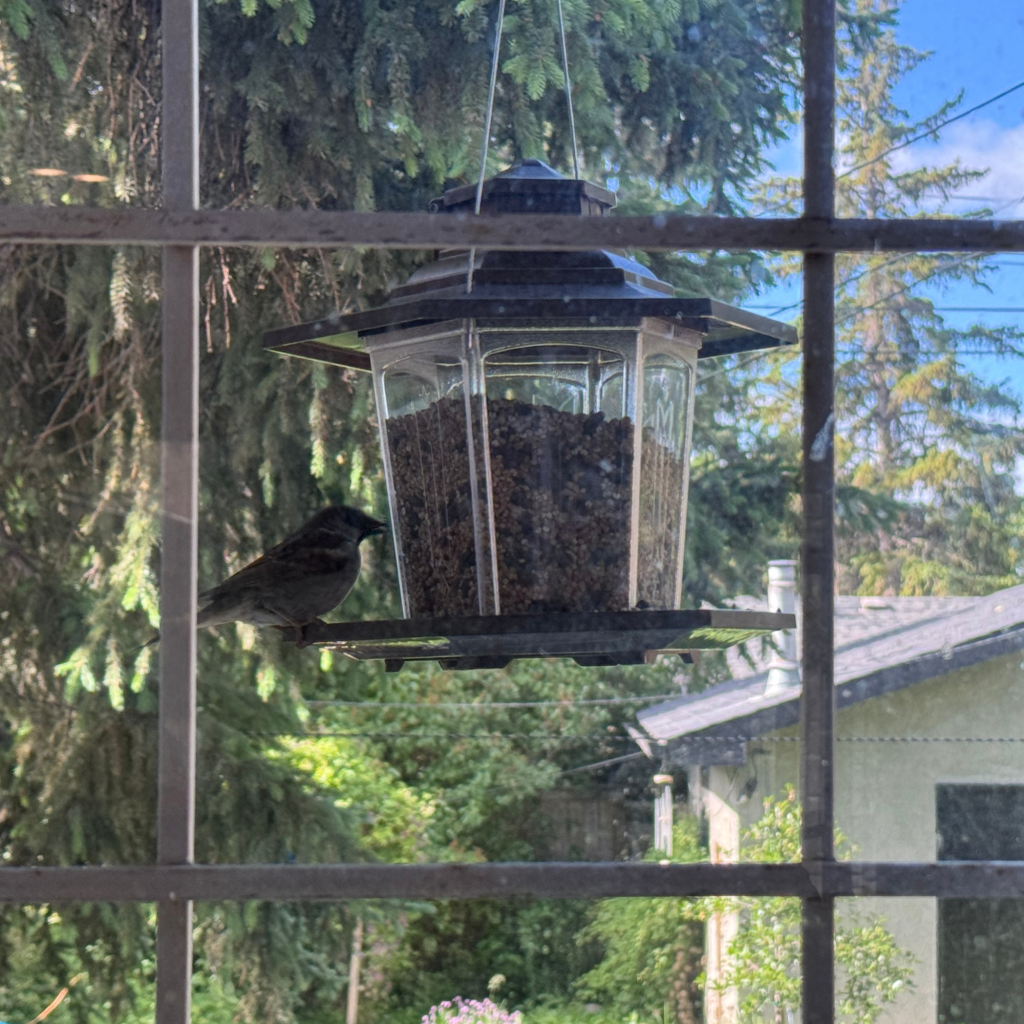
Outside the window, the birds continue to come and go from the feeder. One arrives as another leaves. The morning moves forward as mornings always do.
I watch them for a while and think about inheritance.
Not the kind measured in money or possessions, but the kind carried in stories. The stories that survive because someone loved us enough to remember them. The stories that help us see one another more clearly. The stories that remain long after the storyteller is gone.
Perhaps that is what inheritance truly is: not the certainty of perfect understanding, but the responsibility of carrying forward the stories that help us love one another despite our imperfections.


