It takes Boyd and me about 11 hours to drive from Calgary to our favourite campground.
Whenever I tell people that, they usually ask the obvious question.
“It must be spectacular.”
Well, yes.
But probably not for the reasons they’re imagining.
This isn’t one of those famous national parks where every lookout has an Instagram queue. It’s a gay campground tucked away in the mountains, a place we’ve been returning to for more than a decade. It sits within easy reach of lakes with impossibly clear water and several waterfalls that seem to have been talking to themselves long before any of us arrived. We know the roads by heart now. We know which trail to take when we want to be alone and which lake catches the evening light just right.
It’s far from home.
And somehow, it has become one of our homes.
Writers are supposed to have romantic stories about where they write. A residency in a converted monastery in Italy. A secluded cabin in the woods funded by a generous arts council. A tiny apartment in Paris with a crooked desk overlooking the Seine.
Who am I kidding? I haven’t been accepted to a single writing residency I’ve applied to.
So instead, I have a campsite. A folding chair. Coffee that tastes considerably better after you’ve made it outdoors. And enough mosquito bites to remind me that nature isn’t always interested in collaborating with poets.
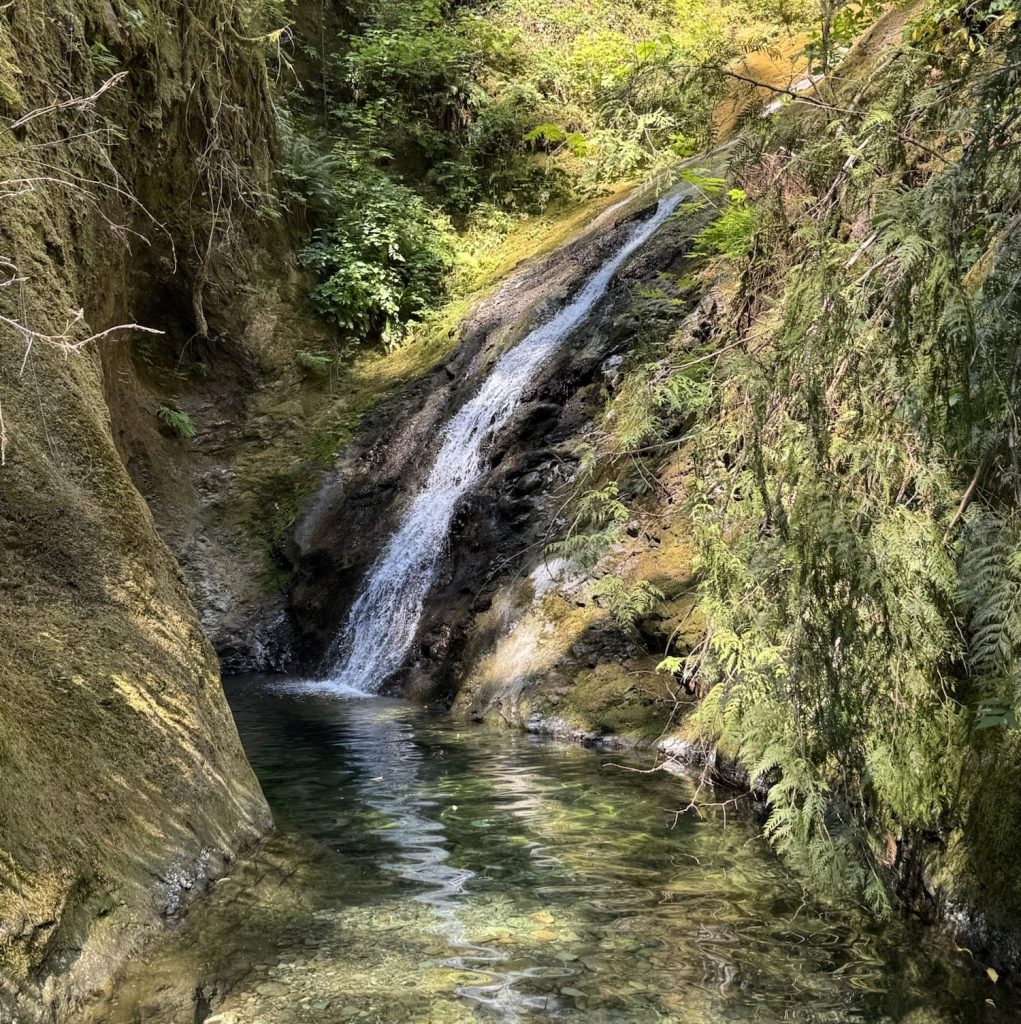
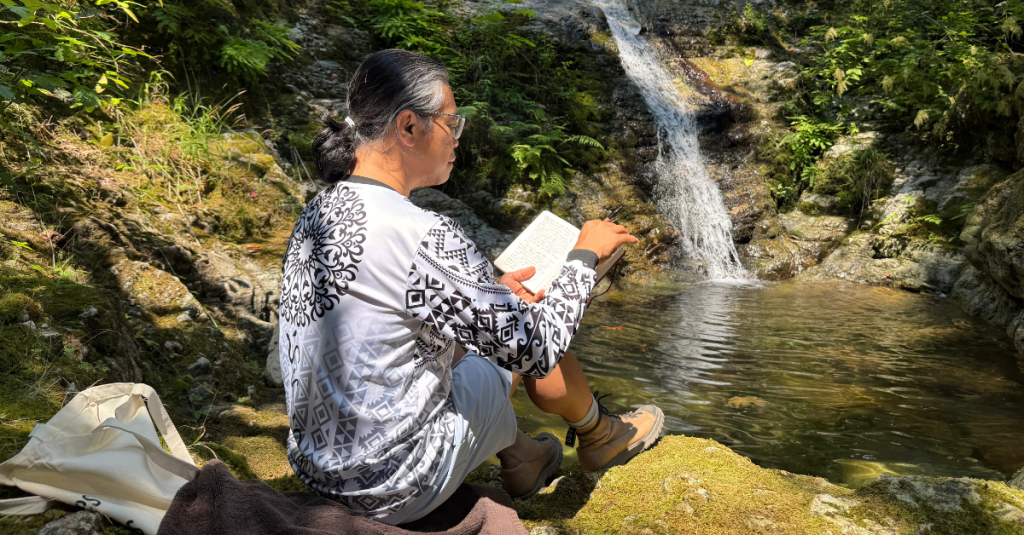
If I’m feeling particularly literary, I’ll carry my notebook down to one of the waterfalls. I like to imagine I look like one of those contemplative writers in black-and-white author photos, communing with nature and waiting for inspiration to descend.
The reality is usually less glamorous. I’m swatting mosquitoes. Wondering whether I remembered to pack enough propane. And trying to stop the wind from turning my notebook into an unsolicited flipbook.
Oddly enough, that’s where some of my best thinking happens. People often imagine campgrounds as places of silence. This one isn’t.
On summer weekends, laughter drifts through the trees. Friends call out to one another from campsites. Someone is almost always grilling something that makes you question your dinner plans. Music floats through the forest, never loud enough to dominate, just enough to remind you that other people are enjoying the same afternoon.
It’s noisy.
But it’s the kind of noise that speaks of freedom. Perhaps that’s because no one here seems to be performing for anyone else. No one is pretending not to laugh too loudly. No one is shrinking themselves to fit into someone else’s expectations.
Two husbands holding hands isn’t remarkable here. Conversations begin easily. Belonging doesn’t require explanation. Sometimes peace sounds like people finally relaxing into themselves. Of course, it isn’t only the people who keep drawing me back.
It’s the landscape.
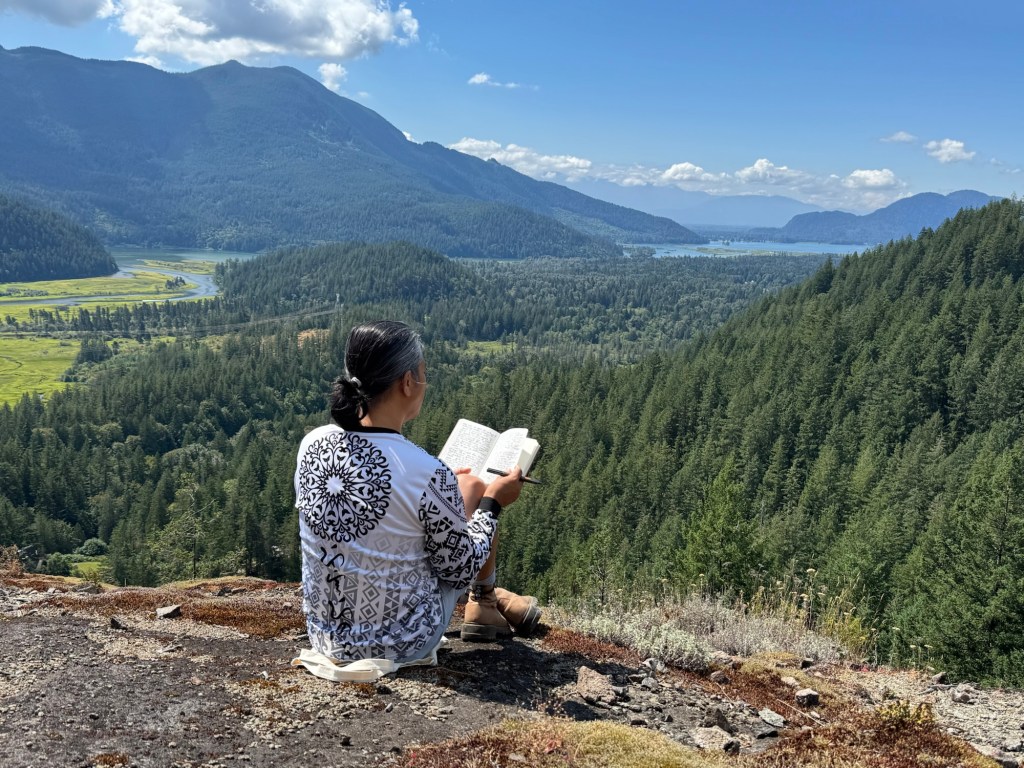
The trees have become patient teachers. They don’t seem particularly concerned with productivity, publication schedules, or whether they’ve accomplished enough before lunchtime. They simply keep growing, season after season, without announcing their progress.
As someone who spends an embarrassing amount of time wondering whether he’s writing enough, publishing enough, revising enough, I find their confidence oddly reassuring.
The river down the road has lessons of its own. It bends around obstacles instead of arguing with them. It keeps moving.
Waterfalls, meanwhile, have no fear of letting go. Water reaches the edge and commits completely. I wish I revised poems with that kind of confidence.
Lately I’ve also been listening to birds with more attention than I ever have before. A few mornings ago, I used one of those bird identification apps to find out who had been singing outside our campsite. The app malfunctioned and didn’t identify my morning singing friend. The campground has wi-fi, but the connection can be spotty.
I tried one more time. This time it worked: Pine Siskin, then Western Tanager. I was delighted. Then I put the phone away. Knowing the bird’s name was satisfying.
Listening to it was better. Maybe that’s what writing really asks of us. Not simply to identify the world, but to notice it.
For years, I’ve thought writing was mostly about finding the right words. I’m beginning to think it’s about finding the right attention. That may be why I rarely write my best work while I’m actually sitting beside the river or the waterfall. Instead, I return home with something much harder to pack. A quieter mind. A slower heartbeat. The ability to notice things I had stopped seeing.
The poems usually arrive later. I used to think nature gave me ideas. Now, I think it gives me something much more valuable. It gives me back my capacity to listen. And perhaps that’s why this place has become so important to me. Not because it’s beautiful, although it is. Not because it’s far away, although eleven hours certainly qualifies. And not even because it has become a second home for Boyd and me over the past decade.
It’s because every time I come here, I remember something that the rest of the year slowly persuades me to forget. The world is already speaking. The waterfalls don’t need my interpretation. The lakes don’t require my approval. The trees aren’t waiting for me to write about them. They simply exist, patiently reminding me that not everything worthwhile has to hurry.
Tomorrow, we’ll begin the long drive back to Calgary. There will be emails waiting. Meetings. Deadlines. Laundry.
The ordinary rhythm of everyday life.
I’ll probably leave with more mosquito bites than finished pages. I’d still call that a successful writing retreat. After all, no residency has accepted me yet.
But this place keeps welcoming me back. Its waterfalls continue their endless conversations. Its lakes hold the sky without complaint. Its trees stand exactly where I left them.
And every summer, the laughter drifting through the campground reminds me that freedom isn’t always quiet. Sometimes it sounds like old friends catching up. Sometimes it sounds like music carried through the pines. Sometimes it sounds like someone laughing so hard that everyone nearby begins to laugh too.
Those sounds, I’ve come to realize, belong in the landscape just as much as the river does.
And somewhere between the waterfalls, the birds, the trees, and that joyful human chorus, Boyd will ask if I got any writing done. I’ll say I got something better.

 Renato Gandia