I haven’t written a blog post in a month.
I could say I’ve been busy, which is true. I’ve been working with my editor Micheline Maylor and revising my poetry collection, Eating Rice, On Our Feet, which is coming from Frontenac House next spring. I’ve been meeting with Billy-Ray Belcourt as part of my mentorship through the Bronwen Wallace Award. I’ve been writing new poems, revisiting old work, thinking about manuscripts and readings and submissions and all the other small and enormous things that seem to gather around a writing life.
I’ve been writing. I just haven’t been writing here. And then this morning, something happened that made me want to come back.
A year ago, while I was revising my memoir, I wrote an essay called “Faithful Disobedience.”
At the time, I wrote it as my nonfiction entry for the Bronwen Wallace Award for Emerging Writers. It didn’t make the cut. My poetry submission, “Psalmody for the Estranged,” did.
There’s something almost comical about writing that sentence now because it makes the whole thing sound so orderly: I submitted three pieces, two lost, one won, end of story.
But writers know that this is almost never how stories about writing end.
We send things away and they disappear from us for a while. Sometimes they return with a rejection. Sometimes they return with an acceptance. Sometimes they sit quietly in a folder while we move on to other things. And sometimes, if we are lucky, we continue believing in them even after someone else has said no.
I kept believing in “Faithful Disobedience.”
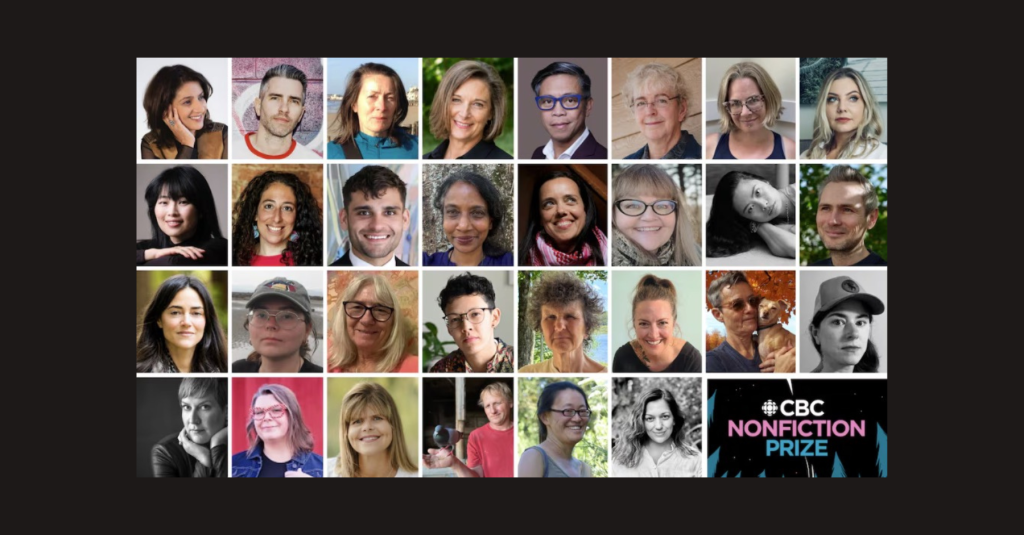
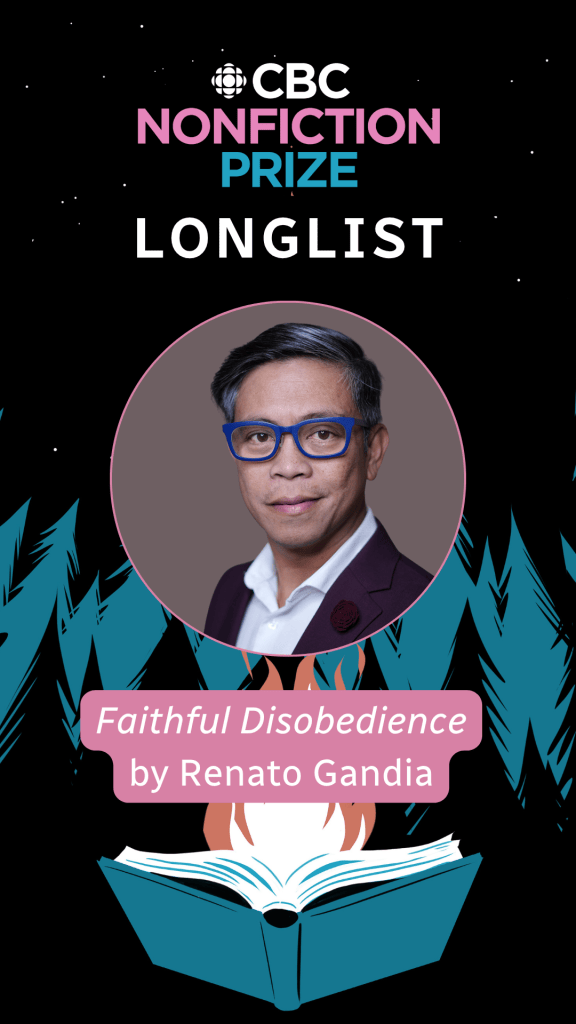
Today, I learned that it has been longlisted for the 2026 CBC Nonfiction Prize.
Even typing that feels a little strange. Perhaps because this essay has never felt entirely separate from the much larger thing I have been trying to write for years.
“Faithful Disobedience” comes from the same territory I have been exploring in my memoir: faith, desire, obedience, vocation, sexuality, and the complicated work of becoming yourself when the life you once believed you were called to live can no longer contain you.
For 13 years, I lived inside the possibility of priesthood. That’s a long time to spend preparing for a life you ultimately do not live. But I have also come to understand that those years did not disappear simply because I left. They shaped the way I think about love. They shaped the way I understand sacrifice and belonging. They shaped my relationship with language, silence, ritual, guilt, the body and God.
And, inevitably, they shaped the writer I became.
When I began writing about that life, I think part of me was still trying to understand it. Maybe I still am.
Memoir has a peculiar way of asking us to become both the person who lived something and the person standing far enough away to examine it. You return to rooms you thought you had left. You listen again to conversations whose exact words you can no longer remember. You encounter earlier versions of yourself and discover that you are sometimes angry with them, sometimes embarrassed by them, and sometimes unexpectedly tender toward them.
You also discover that memory is not a filing cabinet. It moves, argues, and hides things.
Sometimes it waits until you are ready.
“Faithful Disobedience” emerged from that process.
Even the title contains a contradiction I have spent much of my life trying to understand.
Faithful.
Disobedience.
For a long time, I would have thought those words cancelled each other out. Faithfulness meant obedience. Obedience meant remaining within the structures that had taught me what goodness was supposed to look like.
Leaving was failure. Desire was something to master. Becoming myself could easily be mistaken for abandoning the person I had promised to become.
I no longer understand faithfulness that way.
Sometimes the most faithful thing we can do is leave. Sometimes obedience to the deepest truth we know requires disobedience to the structures that once gave us that truth. And sometimes becoming yourself means grieving the self you once worked very hard to become.
That tension eventually grew beyond an essay.
The larger story became Unpriesting: A Memoir of Faith, Desire and Becoming, forthcoming from Freehand Books in fall 2027.
I love that “Faithful Disobedience” has now found another life of its own. Because this morning’s news has reminded me of something I forget surprisingly often: we don’t always know what a piece of writing is doing after we finish it.
We certainly don’t know what a rejection means. A year ago, this essay did not win the Bronwen Wallace Award. That fact did not make it a lesser essay.
Nor did winning the poetry award make “Psalmody for the Estranged” somehow definitive proof that I should abandon nonfiction and devote myself exclusively to poetry.
Thank goodness, because apparently, I am incapable of staying in one genre anyway. Instead, the two pieces simply travelled differently.
One opened a door immediately. The other kept walking. There’s something comforting about that, particularly because writers spend so much of our lives waiting.
We wait for editors, for contests, for magazines, for grants, for the email whose subject line we try to interpret without opening it.
Meanwhile, the work has already begun becoming something beyond us. Perhaps that is what I needed to be reminded of after this past month. I haven’t been absent from this blog because I had nothing to say. If anything, the opposite has been true.
My writing life has become very full.
I am deeply grateful to the CBC Nonfiction Prize readers and jury for this recognition, and honoured to be among this year’s longlisted writers. But I think what moves me most today is not simply being on a list. It’s the reminder that publication and recognition do not always happen according to the timelines we imagine for our work.
A poem can open one door. An essay can wander around for a year and knock on another. A memoir can begin in fragments before you realize you are writing a book. And a writer can disappear from his blog for a month because he is supposedly too busy writing.
There is probably a joke in there somewhere.
For now, though, I am simply grateful. For the strange privilege of having more than one book demanding my attention. And especially for the pieces of writing that refuse to disappear simply because the first door did not open.

 Renato Gandia